
Che giorno è oggi?
What day is it today?
IPA /ke ˈdʒorno ˈɛ ˈɔddʒo/
Say it keh JOHR-noh eh OD-joh
Listen in Italian:
Slow in Italian:
Che giorno è oggi?
Say the days, months and seasons, give the date and your birthday, make plans for specific days, and say what is possible or permitted with potere, si può and bere. Add the reflexive past: mi sono svegliato.
Say these aloud before you start. They come from earlier lessons.
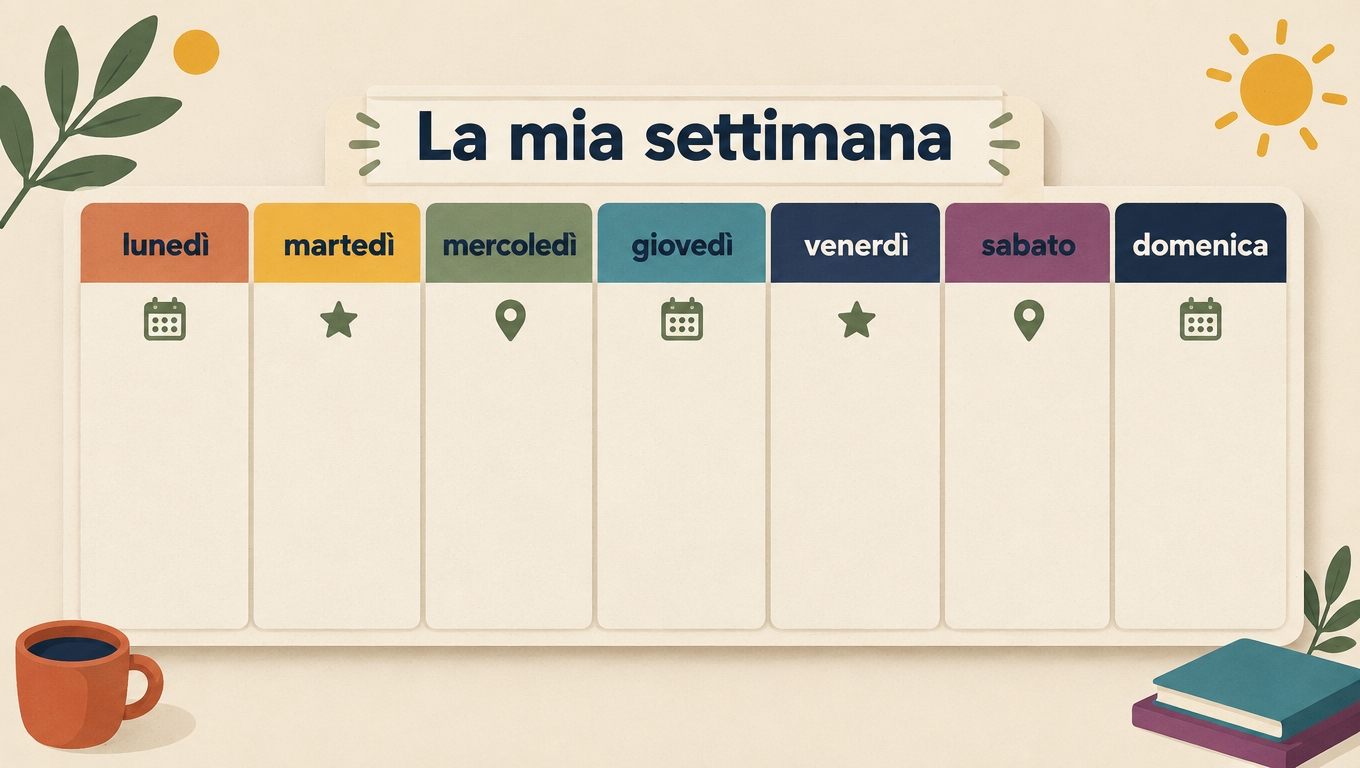
The days of the week are lunedì, martedì, mercoledì, giovedì, venerdì, sabato, domenica. They are written with a small letter, never a capital. All are masculine except la domenica. To say on a particular day, use the day alone: Vado a Roma venerdì — I am going to Rome on Friday.
The seasons are la primavera, l'estate, l'autunno, l'inverno. Use in with seasons: in primavera, in estate, in autunno, in inverno.
For parts of the day, learn four fixed expressions: di mattina (in the morning), nel pomeriggio (in the afternoon), di sera (in the evening), di notte (at night).
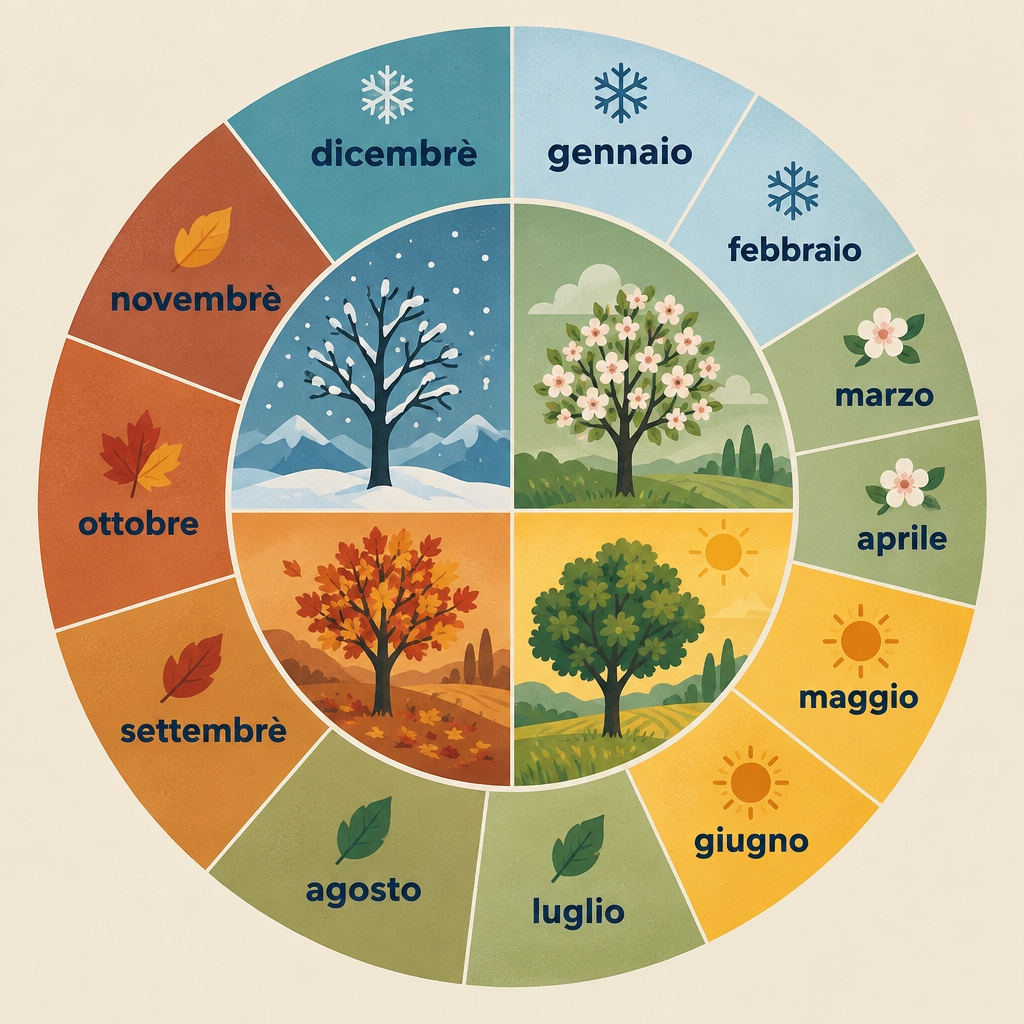
Italian dates use il plus the number plus the month: il tre maggio — the third of May. The months are gennaio, febbraio, marzo, aprile, maggio, giugno, luglio, agosto, settembre, ottobre, novembre, dicembre, and they are also written with a small letter.
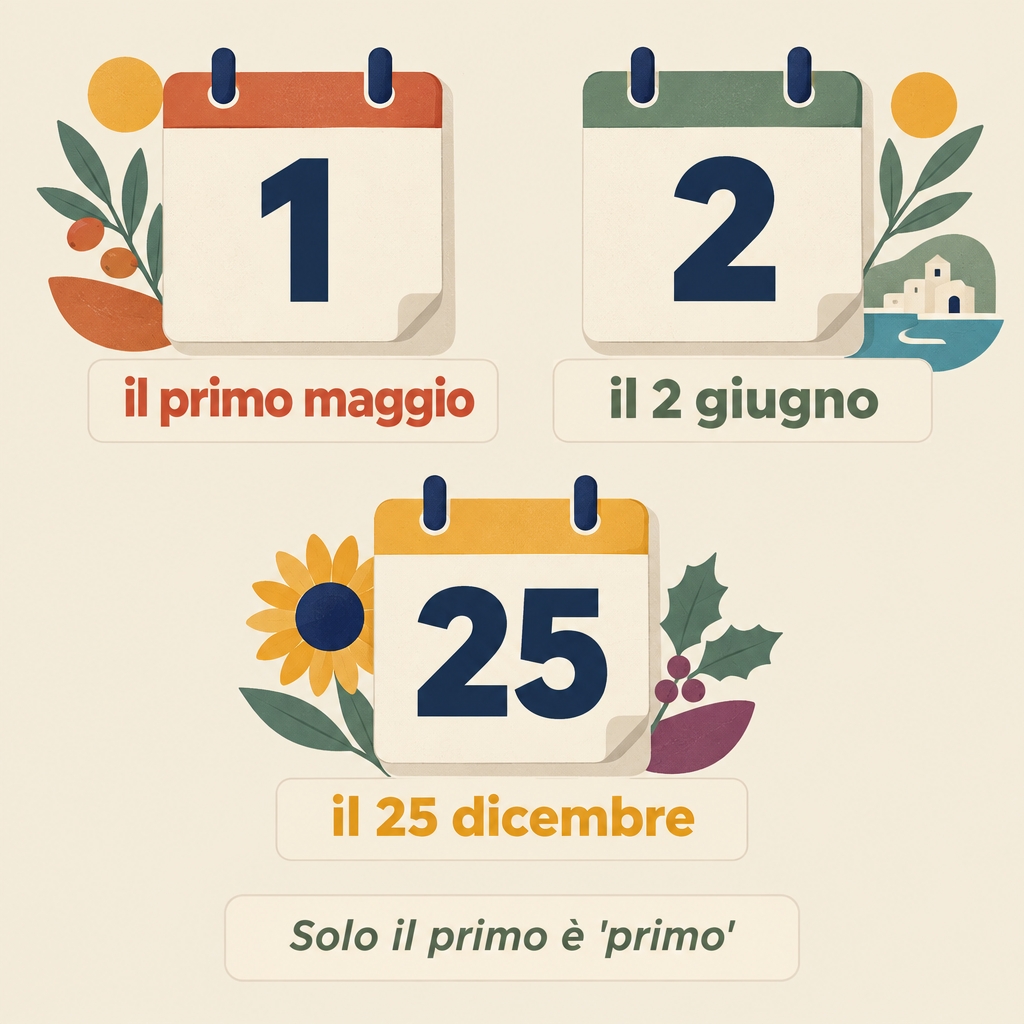
Only the first day of the month is different: il primo maggio, il primo giugno. Every other day uses the ordinary number: il due, il tre, il venti, il trentuno.
To ask about a birthday, say Quando è il tuo compleanno? To answer, say È il quindici giugno. To say when you were born, use nascere with essere: sono nato (male speaker), sono nata (female speaker).
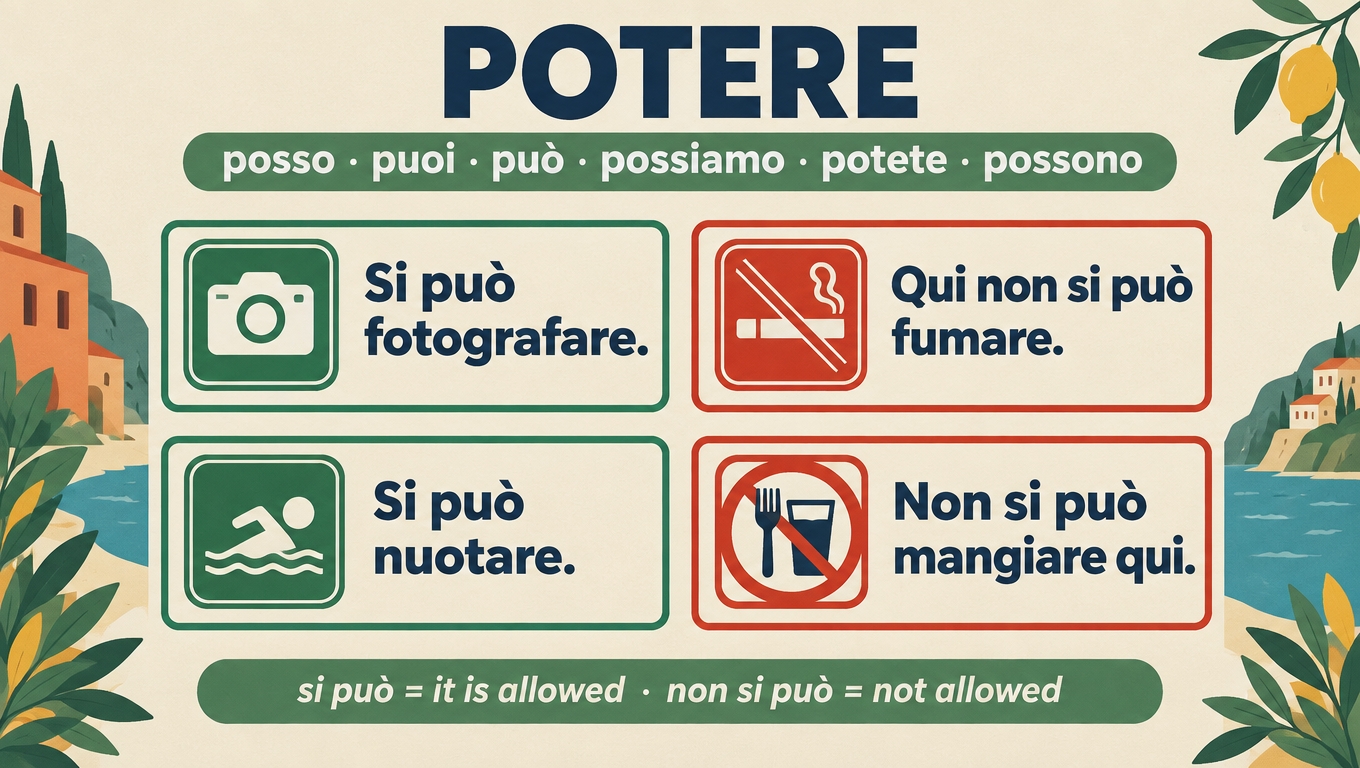
Potere means to be able to and works exactly like volere and sapere from lesson 3: potere plus the infinitive. Posso venire — I can come. Non posso lavorare domenica — I can't work on Sunday.
The forms are irregular: posso, puoi, può, possiamo, potete, possono. Learn them as a set.
For general rules — what anyone may or may not do — Italian uses the impersonal si: Si può entrare? — Can you go in? Non si può fumare. — Smoking is not allowed.
Bere looks like a regular -ere verb, but it is not. It comes from the old form bevere and keeps the stem bev- in every form: bevo, bevi, beve, beviamo, bevete, bevono.
The past participle is bevuto: Ho bevuto un caffè — I drank a coffee.
In lesson 7 you learnt reflexive verbs in the present: mi sveglio, ti alzi, ci riposiamo. In the passato prossimo every reflexive verb takes essere, never avere: mi sono svegliato — I woke up.
Because the auxiliary is essere, the past participle agrees with the subject, exactly as with andare and venire in lesson 6. A man says mi sono svegliato, a woman mi sono svegliata; a group says ci siamo alzati or ci siamo alzate.
The reflexive pronoun goes before the whole group: Ieri mi sono alzata tardi — Yesterday I got up late.
| Form | potere — can | volere — to want | sapere — to know |
|---|---|---|---|
| io | posso | voglio | so |
| tu | puoi | vuoi | sai |
| lui / lei | può | vuole | sa |
| noi | possiamo | vogliamo | sappiamo |
| voi | potete | volete | sapete |
| loro | possono | vogliono | sanno |
All three are followed directly by the infinitive: posso venire, voglio venire, so nuotare.
| Form | bere |
|---|---|
| io | bevo |
| tu | bevi |
| lui / lei | beve |
| noi | beviamo |
| voi | bevete |
| loro | bevono |
Every form keeps the old stem bev-. Past participle: bevuto — ho bevuto.
| Form | Italian |
|---|---|
| Monday | lunedì |
| Tuesday | martedì |
| Wednesday | mercoledì |
| Thursday | giovedì |
| Friday | venerdì |
| Saturday | sabato |
| Sunday | domenica |
Five days end in -dì, from the Latin word for day. Small letters, no capitals.
| Form | Italian |
|---|---|
| January | gennaio |
| February | febbraio |
| March | marzo |
| April | aprile |
| May | maggio |
| June | giugno |
| July | luglio |
| August | agosto |
| September | settembre |
| October | ottobre |
| November | novembre |
| December | dicembre |
Dates: il + number + month — il tre maggio. Only the first is il primo.
| Form | present | passato prossimo |
|---|---|---|
| io | mi sveglio | mi sono svegliato / svegliata |
| tu | ti alzi | ti sei alzato / alzata |
| lui / lei | si veste | si è vestito / vestita |
| noi | ci riposiamo | ci siamo riposati / riposate |
Reflexive verbs always take essere in the past, and the participle agrees with the subject.
| Italian | English | Pronunciation | Audio |
|---|---|---|---|
| potere | to be able to, can, may | /poˈtere/ poh-TEH-reh | Listen in Italian: Slow in Italian: potere |
| bere | to drink | /ˈbere/ BEH-reh | Listen in Italian: Slow in Italian: bere |
| nascere | to be born | /ˈnaʃʃere/ NAHSH-sheh-reh | Listen in Italian: Slow in Italian: nascere |
| festeggiare | to celebrate | /festedˈdʒare/ feh-stehd-JAH-reh | Listen in Italian: Slow in Italian: festeggiare |
| il giorno | day | /il ˈdʒorno/ eel JOHR-noh | Listen in Italian: Slow in Italian: il giorno |
| la settimana | week | /settiˈmana/ seht-tee-MAH-nah | Listen in Italian: Slow in Italian: la settimana |
| il mese | month | /ˈmese/ MEH-zeh | Listen in Italian: Slow in Italian: il mese |
| l'anno | year | /ˈanno/ AHN-noh | Listen in Italian: Slow in Italian: l'anno |
| la data | date | /la ˈdata/ lah DAH-tah | Listen in Italian: Slow in Italian: la data |
| il compleanno | the birthday | /il kompleˈanno/ eel kohm-pleh-AHN-noh | Listen in Italian: Slow in Italian: il compleanno |
| la stagione | season | /la staˈdʒone/ lah stah-JOH-neh | Listen in Italian: Slow in Italian: la stagione |
| la primavera | spring | /la primaˈvɛra/ lah pree-mah-VEH-rah | Listen in Italian: Slow in Italian: la primavera |
| l'estate | summer | /lesˈtate/ leh-STAH-teh | Listen in Italian: Slow in Italian: l'estate |
| l'autunno | autumn | /lauˈtunno/ low-TOON-noh | Listen in Italian: Slow in Italian: l'autunno |
| l'inverno | winter | /linˈvɛrno/ leen-VEHR-noh | Listen in Italian: Slow in Italian: l'inverno |
| il fine settimana | weekend | /il ˈfine settiˈmana/ eel FEE-neh seht-tee-MAH-nah | Listen in Italian: Slow in Italian: il fine settimana |
| la mattina | the morning | /la matˈtina/ lah maht-TEE-nah | Listen in Italian: Slow in Italian: la mattina |
| il pomeriggio | afternoon | /il pomeˈriddʒo/ eel poh-meh-REED-joh | Listen in Italian: Slow in Italian: il pomeriggio |
| la sera | the evening | /la ˈsɛra/ lah SEH-rah | Listen in Italian: Slow in Italian: la sera |
| la notte | night | /la ˈnɔtte/ lah NOHT-teh | Listen in Italian: Slow in Italian: la notte |
| il calendario | calendar | /il kalenˈdarjo/ eel kah-lehn-DAH-ryoh | Listen in Italian: Slow in Italian: il calendario |
| la festa | party, celebration | /la ˈfɛsta/ lah FEH-stah | Listen in Italian: Slow in Italian: la festa |
| presto | early, soon | /ˈprɛsto/ PREH-stoh | Listen in Italian: Slow in Italian: presto |
| tardi | late | /ˈtardi/ TAR-dee | Listen in Italian: Slow in Italian: tardi |
| libero | free, available | /ˈlibero/ LEE-beh-roh | Listen in Italian: Slow in Italian: libero |
| occupato | busy | /okkuˈpato/ ohk-koo-PAH-toh | Listen in Italian: Slow in Italian: occupato |
| possibile | possible | /posˈsibile/ pohs-SEE-bee-leh | Listen in Italian: Slow in Italian: possibile |
| prossimo | next | /ˈprɔssimo/ PROHS-see-moh | Listen in Italian: Slow in Italian: prossimo |
| scorso | last, past | /ˈskorso/ SKOHR-soh | Listen in Italian: Slow in Italian: scorso |
Che giorno è oggi?
What day is it today?
IPA /ke ˈdʒorno ˈɛ ˈɔddʒo/
Say it keh JOHR-noh eh OD-joh
Oggi è giovedì.
Today is Thursday.
IPA /ˈɔddʒo ˈɛ dʒoveˈdi/
Say it OD-joh eh joh-veh-DEE
Domani è venerdì.
Tomorrow is Friday.
IPA /doˈmani ˈɛ venerˈdi/
Say it doh-MAH-nee eh veh-nehr-DEE
Quando è il tuo compleanno?
When is your birthday?
IPA /ˈkwando ˈɛ il ˈtuo kompleˈanno/
Say it KWAHN-doh eh eel TOO-oh kohm-pleh-AHN-noh
Formal: Quando è il Suo compleanno?
Il mio compleanno è il tre maggio.
My birthday is on the third of May.
IPA /il ˈmio kompleˈanno ˈɛ il ˈtre ˈmaddʒo/
Say it eel MEE-oh kohm-pleh-AHN-noh eh eel treh MAHD-joh
il + number + month, with no extra word for on.
Sono nato il venti luglio.
I was born on the twentieth of July.
IPA /ˈsono ˈnato il ˈventi ˈluʎʎo/
Say it SOH-noh NAH-toh eel VEHN-tee LOOL-yoh
Male speaker. A woman says Sono nata.
Ci vediamo lunedì!
See you on Monday!
IPA /tʃi veˈdjamo luneˈdi/
Say it chee veh-DYAH-moh loo-neh-DEE
The day alone means on that day.
Vado a Roma il quindici giugno.
I am going to Rome on the fifteenth of June.
IPA /ˈvado a ˈroma il ˈkwinditʃi ˈdʒuɲɲo/
Say it VAH-doh ah ROH-mah eel KWEEN-dee-chee JOON-yoh
Posso aiutarti?
Can I help you?
IPA /ˈposso ajuˈtarti/
Say it POHS-soh ah-yoo-TAHR-tee
potere + infinitive, then the pronoun attached to the infinitive.
Puoi venire domani?
Can you come tomorrow?
IPA /ˈpuɔi veˈnire doˈmani/
Say it POY veh-NEE-reh doh-MAH-nee
Non posso lavorare domenica.
I can't work on Sunday.
IPA /non ˈposso lavoˈrare doˈmenika/
Say it nohn POHS-soh lah-voh-RAH-reh doh-MEH-nee-kah
Possiamo andare al mare in estate.
We can go to the seaside in summer.
IPA /posˈsjamo anˈdare al ˈmare in esˈtate/
Say it pohs-SYAH-moh ahn-DAH-reh ahl MAH-reh een eh-STAH-teh
Potete venire alle otto.
You can come at eight o'clock.
IPA /poˈtete veˈnire ˈalle ˈɔtto/
Say it poh-TEH-teh veh-NEE-reh AHL-leh OHT-toh
You plural — potete.
I miei amici non possono venire sabato.
My friends can't come on Saturday.
IPA /i ˈmjɛi aˈmitʃi non ˈpossono veˈnire ˈsabato/
Say it ee MYEH-ee ah-MEE-chee nohn POHS-soh-noh veh-NEE-reh SAH-bah-toh
Non si può fumare qui.
You can't smoke here.
IPA /non si ˈpwɔ fuˈmare ˈkwi/
Say it nohn see PWOH foo-MAH-reh KWEE
non si può + infinitive = a general rule for everyone.
Si può parcheggiare qui?
Can you park here?
IPA /si ˈpwɔ parkedˈdʒare ˈkwi/
Say it see PWOH pahr-kehd-JAH-reh KWEE
Mi sono svegliato presto stamattina.
I woke up early this morning.
IPA /mi ˈsono sveˈʎato ˈpresto stamatˈtina/
Say it mee SOH-noh sveh-LYAH-toh PREH-stoh stah-maht-TEE-nah
Male speaker. A woman says Mi sono svegliata. Stamattina = this morning.
Ti sei alzata tardi ieri?
Did you get up late yesterday?
IPA /ti ˈsɛi alˈtsata ˈtardi ˈjɛri/
Say it tee SAY ahl-TSAH-tah TAHR-dee YEH-ree
Speaking to a woman; to a man, Ti sei alzato.
Ci siamo riposati nel fine settimana.
We relaxed at the weekend.
IPA /tʃi ˈsjamo ripoˈzati nel ˈfine settiˈmana/
Say it chee SYAH-moh ree-poh-ZAH-tee nehl FEE-neh seht-tee-MAH-nah
Bevo un caffè di mattina.
I have a coffee in the morning.
IPA /ˈbevo un kafˈfɛ di matˈtina/
Say it BEH-voh oon kahf-FEH dee maht-TEE-nah
Cosa bevi di solito?
What do you usually drink?
IPA /ˈkɔza ˈbevi di ˈsolito/
Say it KOH-zah BEH-vee dee SOH-lee-toh
di solito = usually.
Beviamo qualcosa stasera?
Shall we have a drink tonight?
IPA /beˈvjamo ˈkwalkoza staˈsera/
Say it beh-VYAH-moh KWAHL-koh-zah stah-SEH-rah
stasera = this evening, tonight.
Di mattina leggo, di sera guardo un film.
In the morning I read, in the evening I watch a film.
IPA /di matˈtina ˈleɡɡo, di ˈsera ˈɡwardo um ˈfilm/
Say it dee maht-TEE-nah LEHG-goh, dee SEH-rah GWAHR-doh oon FEELM
D'inverno mi sveglio tardi.
In winter I wake up late.
IPA /dinˈvɛrno mi ˈzvɛʎo ˈtardi/
Say it deen-VEHR-noh mee ZVEH-lyoh TAHR-dee
d'inverno = in + l'inverno.
In quale mese siamo?
What month are we in?
IPA /iŋ ˈkwale ˈmeze ˈsjamo/
Say it een KWAH-leh MEH-zeh SYAH-moh
Siamo in ottobre.
It is October.
IPA /ˈsjamo in otˈtobre/
Say it SYAH-moh een oht-TOH-breh
Literally: we are in October — the natural Italian way to say it.
Non posso parlare adesso, lavoro.
I can't talk now, I'm working.
IPA /non ˈposso parˈlare aˈdesso, laˈvoro/
Say it nohn POHS-soh pahr-LAH-reh ah-DEHS-soh, lah-VOH-roh
Quando possiamo vederci?
When can we meet?
IPA /ˈkwando posˈsjamo veˈdertʃi/
Say it KWAHN-doh pohs-SYAH-moh veh-DEHR-chee
vederci = vedere + ci, to see each other.
Chiara phones her friend Ben to arrange a day to meet.
Ciao Ben! Puoi venire da me venerdì sera?
Hi Ben! Can you come to my place on Friday evening?
Listen in Italian: Slow in Italian: Ciao Ben! Puoi venire da me venerdì sera?Venerdì non posso, lavoro di sera. Va bene sabato?
I can't on Friday, I work in the evenings. Is Saturday all right?
Listen in Italian: Slow in Italian: Venerdì non posso, lavoro di sera. Va bene sabato?Sabato sono occupata... Possiamo vederci domenica pomeriggio?
I'm busy on Saturday... Can we meet on Sunday afternoon?
Listen in Italian: Slow in Italian: Sabato sono occupata... Possiamo vederci domenica pomeriggio?Domenica va bene! A che ora?
Sunday is fine! At what time?
Listen in Italian: Slow in Italian: Domenica va bene! A che ora?Verso le tre. Va bene?
Around three. Is that all right?
Listen in Italian: Slow in Italian: Verso le tre. Va bene?Perfetto. Posso portare qualcosa?
Perfect. Can I bring anything?
Listen in Italian: Slow in Italian: Perfetto. Posso portare qualcosa?Sì, porta qualcosa da bere!
Yes, bring something to drink!
Listen in Italian: Slow in Italian: Sì, porta qualcosa da bere!Va bene. Ci vediamo domenica!
All right. See you on Sunday!
Listen in Italian: Slow in Italian: Va bene. Ci vediamo domenica!Mrs Reed, a visitor from London, asks about the museum at the entrance.
Buongiorno. Si può visitare il museo oggi?
Good morning. Can you visit the museum today?
Listen in Italian: Slow in Italian: Buongiorno. Si può visitare il museo oggi?Buongiorno, signora. Sì, oggi è aperto. Domani, lunedì, è chiuso.
Good morning, madam. Yes, today it is open. Tomorrow, Monday, it is closed.
Listen in Italian: Slow in Italian: Buongiorno, signora. Sì, oggi è aperto. Domani, lunedì, è chiuso.Capisco. E si può fotografare?
I see. And can you take photographs?
Listen in Italian: Slow in Italian: Capisco. E si può fotografare?Sì, si può, ma non si può usare il flash.
Yes, you can, but you can't use a flash.
Listen in Italian: Slow in Italian: Sì, si può, ma non si può usare il flash.Benissimo. Posso pagare qui?
Very good. Can I pay here?
Listen in Italian: Slow in Italian: Benissimo. Posso pagare qui?Sì, certo. Può pagare qui.
Yes, of course. You can pay here.
Listen in Italian: Slow in Italian: Sì, certo. Può pagare qui.Grazie. A che ora chiude il museo?
Thank you. What time does the museum close?
Listen in Italian: Slow in Italian: Grazie. A che ora chiude il museo?Chiude alle sei di sera.
It closes at six in the evening.
Listen in Italian: Slow in Italian: Chiude alle sei di sera.Perfetto. Grazie mille, arrivederci!
Perfect. Thank you very much, goodbye!
Listen in Italian: Slow in Italian: Perfetto. Grazie mille, arrivederci!Davide chats with his friend Sofia the morning after her birthday party.
Ciao Sofia! Quanti anni hai adesso?
Hi Sofia! How old are you now?
Listen in Italian: Slow in Italian: Ciao Sofia! Quanti anni hai adesso?Ho venticinque anni. Il mio compleanno è il due ottobre.
I'm twenty-five. My birthday is on the second of October.
Listen in Italian: Slow in Italian: Ho venticinque anni. Il mio compleanno è il due ottobre.E com'è andata la festa ieri sera?
And how was the party last night?
Listen in Italian: Slow in Italian: E com'è andata la festa ieri sera?Benissimo! Ho bevuto solo acqua e ho mangiato molto.
Really good! I only drank water and I ate a lot.
Listen in Italian: Slow in Italian: Benissimo! Ho bevuto solo acqua e ho mangiato molto.A che ora ti sei alzata stamattina?
What time did you get up this morning?
Listen in Italian: Slow in Italian: A che ora ti sei alzata stamattina?Mi sono svegliata alle dieci, ma mi sono alzata alle undici!
I woke up at ten, but I got up at eleven!
Listen in Italian: Slow in Italian: Mi sono svegliata alle dieci, ma mi sono alzata alle undici!Puoi venire al mare con noi domenica?
Can you come to the seaside with us on Sunday?
Listen in Italian: Slow in Italian: Puoi venire al mare con noi domenica?Domenica non posso, lavoro.
I can't on Sunday, I'm working.
Listen in Italian: Slow in Italian: Domenica non posso, lavoro.Peccato! Allora ci vediamo la prossima volta.
What a pity! See you next time, then.
Listen in Italian: Slow in Italian: Peccato! Allora ci vediamo la prossima volta.Choose the correct past form.
Choose the correct form of potere.
Choose the correct form of bere.
Choose the correct expression for a general rule.
Write the correct form.
Write the correct form.
Write the correct form.
Write the full past form.
Fill the gap with the correct auxiliary.
Fill the gap with the correct article.
Fill the gap with the correct preposition.
Fill the gap with the correct reflexive pronoun.
Translate into Italian (informal you).
Translate into Italian.
Translate into Italian.
Translate into Italian.
Translate into English.
Translate into English.
Translate into English.
Tap the words in the correct order.
Tap the words in the correct order.
Tap an English word, then tap its Italian match.
Tap an English word, then tap its Italian match.
Tap an English expression, then tap its Italian match.
True or false?
True or false?
Play the audio, then type exactly what you hear.
Play the audio and choose the correct answer.
Rewrite the sentence in the passato prossimo.
Choose the correct article for settimana.
Choose the correct reflexive pronoun.
Say the sentence aloud, then show the meaning and rate yourself.
Say each sentence aloud three times: once slowly, once at normal speed, once from memory. Then change the day, the month or the time and say your own version.
Before you move on, make sure you can do all of this without looking:
Go deeper: Modal verbs: potere · Reflexive verbs · Passato prossimo · avere or essere in the past · Time and dates