
Come ti chiami?
What's your name?
IPA /ˈkome ti ˈkjami/
Say it KOH-meh tee KYAH-mee
Literally: how do you call yourself?
Listen in Italian:
Slow in Italian:
Come ti chiami?
Talk about your normal day in Italian: wake up, get up, wash, get dressed and go to bed. Master reflexive verbs with mi, ti, si, ci, vi, si, the -isc verbs capire, finire, preferire and pulire, and the everyday commands Alzati! and Sbrigati!
Say these aloud before you start. They come from earlier lessons.
Many everyday actions in Italian are reflexive: the person doing the action also receives it. In the dictionary these verbs end in -si: svegliarsi (to wake up), alzarsi (to get up), lavarsi (to wash).
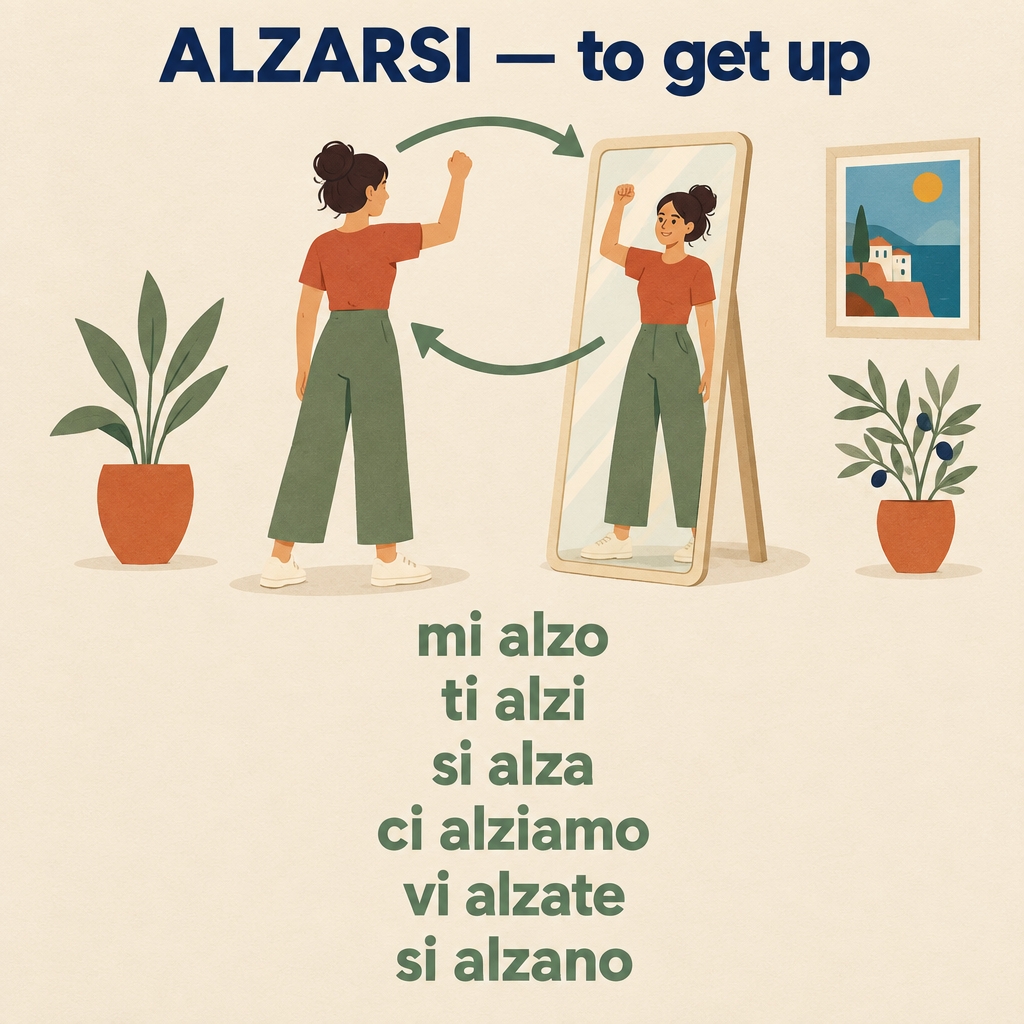
In a sentence, remove -si and place the right reflexive pronoun directly before the verb: mi, ti, si, ci, vi, si. So alzarsi becomes mi alzo (I get up), ti alzi (you get up), si alza (he/she gets up), ci alziamo, vi alzate, si alzano. The verb itself follows the normal present-tense endings you already know.
When a reflexive verb stays in the infinitive after another verb, the pronoun attaches to the end and changes to match the subject: preferisco alzarmi presto (I prefer to get up early).
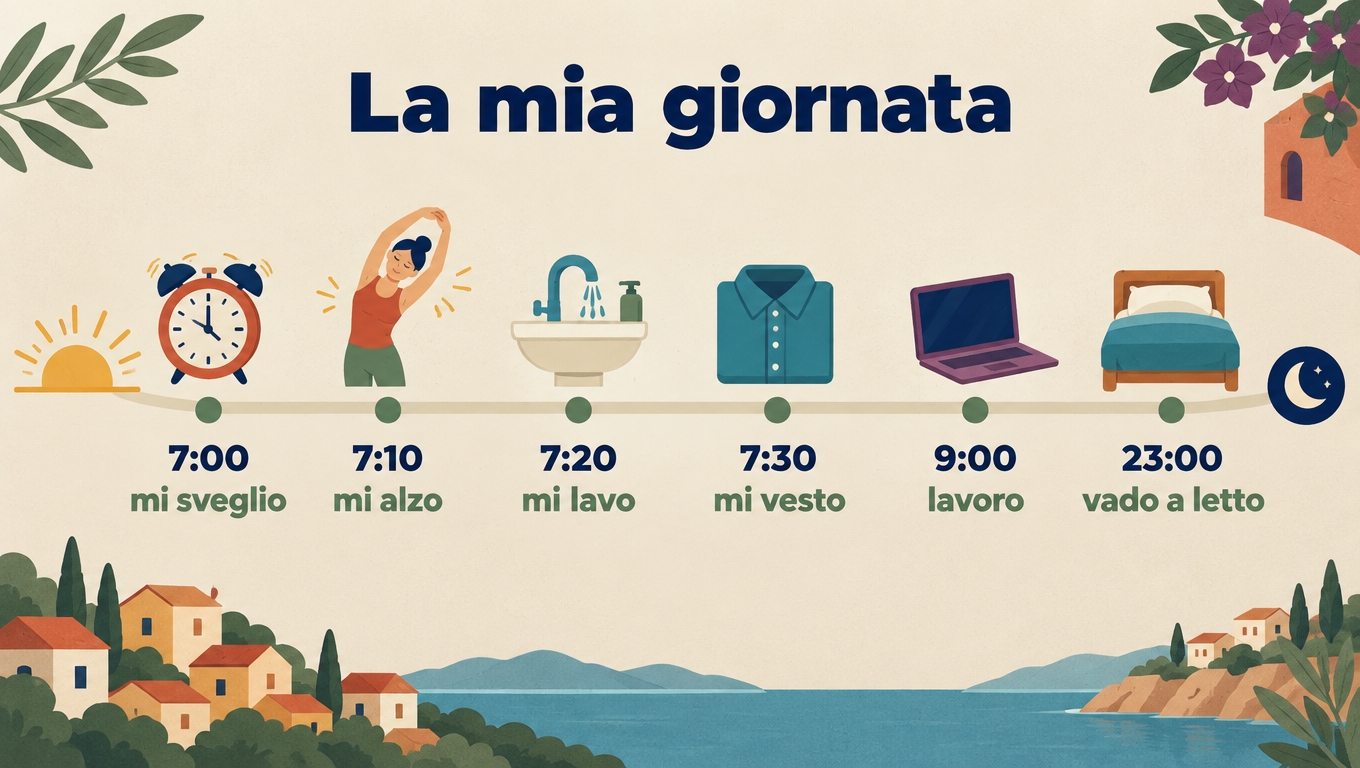
To describe your routine, chain the actions with three small words: prima (first), poi (then) and dopo (afterwards). Di solito (usually) and sempre (always) tell the listener how often something happens.
Two fixed expressions carry the day: fare colazione (to have breakfast) and andare a letto (to go to bed). For times of day, use la mattina (in the morning) and la sera (in the evening).
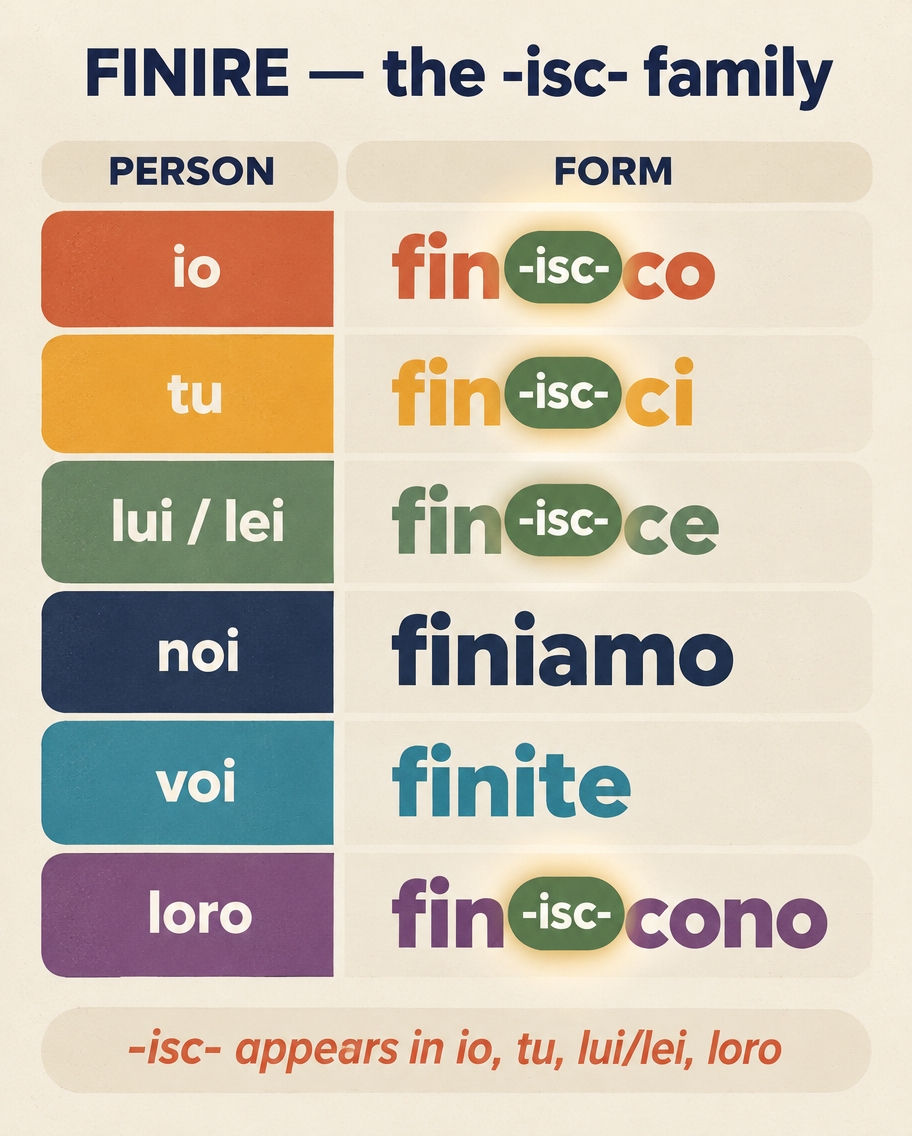
Four common -ire verbs insert -isc- between the stem and the ending in four of the six persons: io, tu, lui/lei and loro. So capire gives capisco, capisci, capisce, capiscono — but noi capiamo and voi capite stay regular.
The same pattern works for finire (finisco), preferire (preferisco) and pulire (pulisco). Learn the pattern once and all four verbs behave identically.
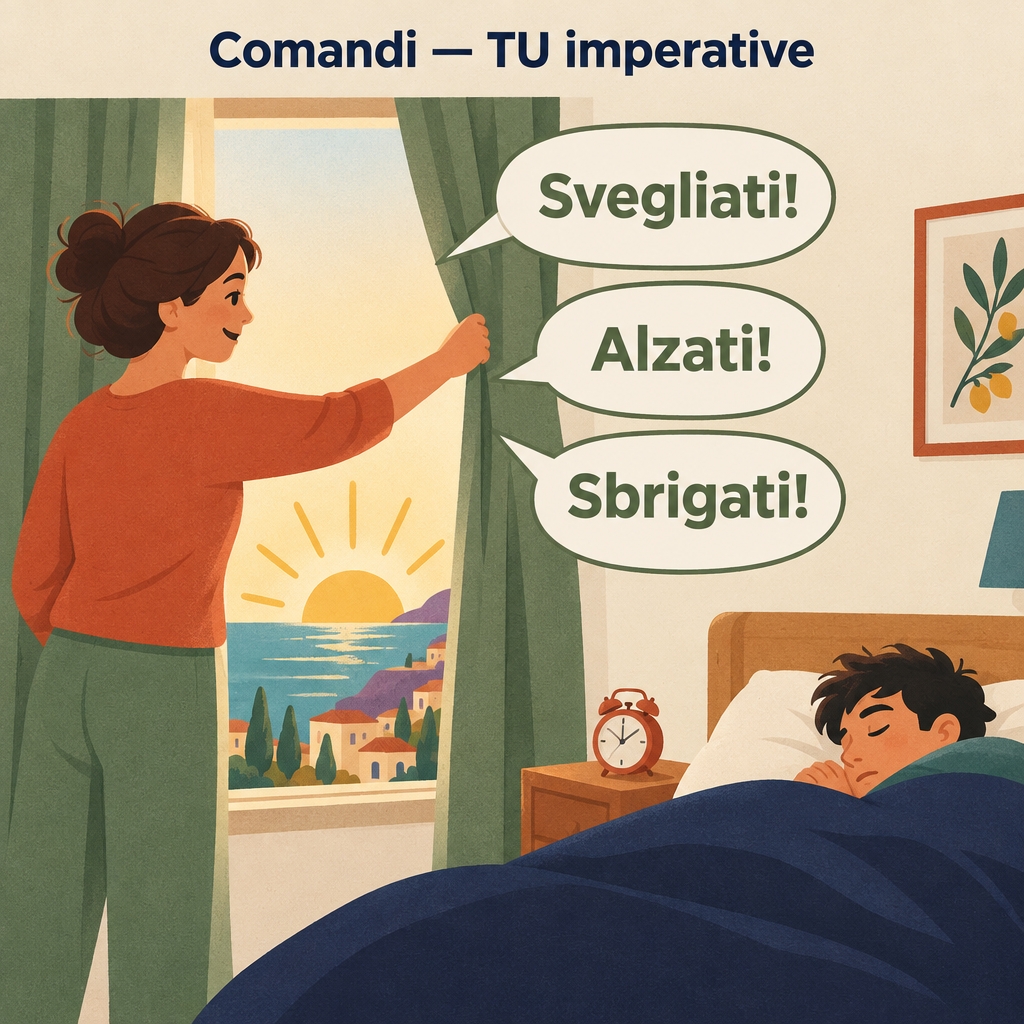
Italian commands to one person you know well (tu) put the reflexive pronoun after the verb, joined to it: alza + ti becomes Alzati! (Get up!) and sbriga + ti becomes Sbrigati! (Hurry up!).
Speaking to more than one person, use the voi form the same way: Alzatevi! Sbrigatevi! For this lesson, simply memorise the two singular commands as fixed phrases — you will hear them constantly in Italian homes.
| Form | svegliarsi | alzarsi | vestirsi |
|---|---|---|---|
| io | mi sveglio | mi alzo | mi vesto |
| tu | ti svegli | ti alzi | ti vesti |
| lui / lei | si sveglia | si alza | si veste |
| noi | ci svegliamo | ci alziamo | ci vestiamo |
| voi | vi svegliate | vi alzate | vi vestite |
| loro | si svegliano | si alzano | si vestono |
The pronoun changes with the person; the verb keeps its normal endings. Vestirsi is an -ire verb: vesto, vesti, veste, vestiamo, vestite, vestono.
| Form | capire | finire | preferire |
|---|---|---|---|
| io | capisco | finisco | preferisco |
| tu | capisci | finisci | preferisci |
| lui / lei | capisce | finisce | preferisce |
| noi | capiamo | finiamo | preferiamo |
| voi | capite | finite | preferite |
| loro | capiscono | finiscono | preferiscono |
-isc- appears everywhere except noi and voi. Pulire follows the same pattern: pulisco, puliamo.
| Form | svegliarsi | alzarsi | sbrigarsi |
|---|---|---|---|
| tu | Svegliati! | Alzati! | Sbrigati! |
| voi | Svegliatevi! | Alzatevi! | Sbrigatevi! |
In commands, the pronoun joins the end of the verb: alza + ti → alzati.
| Italian | English | Pronunciation | Audio |
|---|---|---|---|
| chiamarsi | to be called | /kjaˈmarsi/ kyah-MAHR-see | Listen in Italian: Slow in Italian: chiamarsi |
| svegliarsi | to wake up | /zveʎˈʎarsi/ zveh-LYAR-see | Listen in Italian: Slow in Italian: svegliarsi |
| alzarsi | to get up | /alˈtsarsi/ ahl-TSAR-see | Listen in Italian: Slow in Italian: alzarsi |
| lavarsi | to wash (oneself) | /laˈvarsi/ lah-VAR-see | Listen in Italian: Slow in Italian: lavarsi |
| vestirsi | to get dressed | /vesˈtirsi/ vehs-TEER-see | Listen in Italian: Slow in Italian: vestirsi |
| riposarsi | to rest | /ripoˈzarsi/ ree-poh-ZAR-see | Listen in Italian: Slow in Italian: riposarsi |
| addormentarsi | to fall asleep | /addormenˈtarsi/ ahd-dohr-mehn-TAR-see | Listen in Italian: Slow in Italian: addormentarsi |
| innamorarsi | to fall in love | /innamoˈrarsi/ een-nah-moh-RAR-see | Listen in Italian: Slow in Italian: innamorarsi |
| sposarsi | to get married | /spoˈzarsi/ spoh-ZAR-see | Listen in Italian: Slow in Italian: sposarsi |
| sbrigarsi | to hurry up | /ˈzbriɡarsi/ ZBREE-gar-see | Listen in Italian: Slow in Italian: sbrigarsi |
| capire | to understand | /kaˈpire/ kah-PEE-reh | Listen in Italian: Slow in Italian: capire |
| finire | to finish | /fiˈnire/ fee-NEE-reh | Listen in Italian: Slow in Italian: finire |
| preferire | to prefer | /prefeˈrire/ preh-feh-REE-reh | Listen in Italian: Slow in Italian: preferire |
| pulire | to clean | /puˈlire/ poo-LEE-reh | Listen in Italian: Slow in Italian: pulire |
| la sveglia | the alarm clock | /la ˈzvɛʎʎa/ lah ZVEH-lyah | Listen in Italian: Slow in Italian: la sveglia |
| la mattina | the morning | /la matˈtina/ lah maht-TEE-nah | Listen in Italian: Slow in Italian: la mattina |
| la sera | the evening | /la ˈsɛra/ lah SEH-rah | Listen in Italian: Slow in Italian: la sera |
| la giornata | the day (whole day) | /la dʒorˈnata/ lah johr-NAH-tah | Listen in Italian: Slow in Italian: la giornata |
| la doccia | the shower | /la ˈdottʃa/ lah DOHT-chah | Listen in Italian: Slow in Italian: la doccia |
| la colazione | breakfast | /la kolatˈtsjone/ lah koh-laht-TSYOH-neh | Listen in Italian: Slow in Italian: la colazione |
| il letto | the bed | /il ˈlɛtto/ eel LEHT-toh | Listen in Italian: Slow in Italian: il letto |
| il marito | husband | /maˈrito/ mah-REE-toh | Listen in Italian: Slow in Italian: il marito |
| la moglie | wife | /ˈmɔʎʎe/ MOH-lyeh | Listen in Italian: Slow in Italian: la moglie |
| presto | early, soon | /ˈprɛsto/ PREH-stoh | Listen in Italian: Slow in Italian: presto |
| tardi | late | /ˈtardi/ TAR-dee | Listen in Italian: Slow in Italian: tardi |
| di solito | usually | /di ˈsɔlito/ dee SOH-lee-toh | Listen in Italian: Slow in Italian: di solito |
| sempre | always | /ˈsɛmpre/ SEHM-preh | Listen in Italian: Slow in Italian: sempre |
| prima | first, before | /ˈprima/ PREE-mah | Listen in Italian: Slow in Italian: prima |
| poi | then, afterwards | /ˈpɔi/ POY | Listen in Italian: Slow in Italian: poi |
| dopo | afterwards, after | /ˈdopo/ DOH-poh | Listen in Italian: Slow in Italian: dopo |
Come ti chiami?
What's your name?
IPA /ˈkome ti ˈkjami/
Say it KOH-meh tee KYAH-mee
Literally: how do you call yourself?
Mi chiamo Sofia.
My name is Sofia.
IPA /mi ˈkjamo soˈfia/
Say it mee KYAH-moh soh-FEE-ah
Mi sveglio presto la mattina.
I wake up early in the morning.
IPA /mi ˈzvɛʎo ˈprɛsto la matˈtina/
Say it mee ZVEH-lyoh PREH-stoh lah maht-TEE-nah
Mi alzo alle sette.
I get up at seven.
IPA /mi ˈaltso ˈalle ˈsɛtte/
Say it mee AHL-tsoh AHL-leh SEHT-teh
alle + time: alle sette, alle otto.
A che ora ti alzi?
What time do you get up?
IPA /a ke ˈɔra ti ˈaltsi/
Say it ah keh OH-rah tee AHL-tsee
Faccio colazione alle otto.
I have breakfast at eight.
IPA /ˈfattʃo kolatˈtsjone ˈalle ˈɔtto/
Say it FAHT-choh koh-laht-TSYOH-neh AHL-leh OHT-toh
fare colazione = to have breakfast.
Faccio la doccia la sera.
I have a shower in the evening.
IPA /ˈfattʃo la ˈdottʃa la ˈsɛra/
Say it FAHT-choh lah DOHT-chah lah SEH-rah
fare la doccia = to have a shower.
Prima mi lavo, poi mi vesto.
First I wash, then I get dressed.
IPA /ˈprima mi ˈlavo ˈpɔi mi ˈvɛsto/
Say it PREE-mah mee LAH-voh POY mee VEH-stoh
Vado a letto tardi.
I go to bed late.
IPA /ˈvado a ˈlɛtto ˈtardi/
Say it VAH-doh ah LEHT-toh TAR-dee
andare a letto = to go to bed.
A che ora vai a letto?
What time do you go to bed?
IPA /a ke ˈɔra ˈvai a ˈlɛtto/
Say it ah keh OH-rah VYE ah LEHT-toh
Mi addormento subito.
I fall asleep straight away.
IPA /mi addorˈmento ˈsubito/
Say it mee ahd-dohr-MEHN-toh SOO-bee-toh
Di solito mi riposo dopo pranzo.
I usually rest after lunch.
IPA /di ˈsɔlito mi riˈpozo ˈdopo ˈprandzo/
Say it dee SOH-lee-toh mee ree-POH-zoh DOH-poh PRAHN-dzoh
Alzati! È tardi!
Get up! It's late!
IPA /alˈtsati ɛ ˈtardi/
Say it ahl-TSAH-tee eh TAR-dee
In commands the pronoun joins the verb: alza + ti.
Sbrigati! Il caffè è pronto!
Hurry up! The coffee's ready!
IPA /ˈzbriɡati il kafˈfɛ ɛ ˈpronto/
Say it ZBREE-gah-tee eel kahf-FEH eh PROHN-toh
Capisco l'italiano, ma non parlo bene.
I understand Italian, but I don't speak well.
IPA /kaˈpisko litaˈljano ma non ˈparlo ˈbɛne/
Say it kah-PEE-skoh lee-tah-LYAH-noh mah nohn PAR-loh BEH-neh
Non capisco.
I don't understand.
IPA /non kaˈpisko/
Say it nohn kah-PEE-skoh
One of the most useful phrases in any conversation.
Finisco di lavorare alle sei.
I finish work at six.
IPA /fiˈnisko di lavoˈrare ˈalle ˈsɛi/
Say it fee-NEE-skoh dee lah-voh-RAH-reh AHL-leh SAY
finire di + infinitive = to finish doing something.
Preferisco il tè.
I prefer tea.
IPA /prefeˈrisko il ˈtɛ/
Say it preh-feh-REE-skoh eel TEH
Preferisco alzarmi presto.
I prefer to get up early.
IPA /prefeˈrisko alˈtsarmi ˈprɛsto/
Say it preh-feh-REE-skoh ahl-TSAR-mee PREH-stoh
With an infinitive the pronoun attaches to the end: alzarsi → alzarmi.
Pulisco la casa il sabato.
I clean the house on Saturdays.
IPA /puˈlisko la ˈkaza il ˈsabato/
Say it poo-LEE-skoh lah KAH-zah eel SAH-bah-toh
il sabato can mean every Saturday.
Ci svegliamo tardi la domenica.
We wake up late on Sundays.
IPA /tʃi zveʎˈʎamo ˈtardi la doˈmenika/
Say it chee zveh-LYAH-moh TAR-dee lah doh-MEH-nee-kah
Vi alzate presto voi due?
Do you two get up early?
IPA /vi alˈtsate ˈprɛsto voi ˈdue/
Say it vee ahl-TSAH-teh PREH-stoh VOY DOO-eh
vi is the reflexive pronoun for voi.
Mario si alza prima di me.
Mario gets up before me.
IPA /ˈmario si ˈaltsa ˈprima di ˈme/
Say it MAH-ree-oh see AHL-tsah PREE-mah dee MEH
Si sposano a giugno.
They're getting married in June.
IPA /si ˈspozano a ˈdʒuɲɲo/
Say it see SPOH-zah-noh ah JOON-nyoh
Giulia tries to get her flatmate Marco out of bed before work.
Marco, alzati! Sono le otto!
Marco, get up! It's eight o'clock!
Listen in Italian: Slow in Italian: Marco, alzati! Sono le otto!Cinque minuti... Mi sveglio sempre tardi il lunedì.
Five more minutes... I always wake up late on Mondays.
Listen in Italian: Slow in Italian: Cinque minuti... Mi sveglio sempre tardi il lunedì.Sbrigati! Il caffè è pronto e io esco alle otto e mezza.
Hurry up! The coffee's ready and I leave at half past eight.
Listen in Italian: Slow in Italian: Sbrigati! Il caffè è pronto e io esco alle otto e mezza.Va bene, mi alzo. Fai la doccia tu per prima?
All right, I'm getting up. Are you having a shower first?
Listen in Italian: Slow in Italian: Va bene, mi alzo. Fai la doccia tu per prima?Sì, poi mi vesto e faccio colazione. Tu a che ora finisci oggi?
Yes, then I get dressed and have breakfast. What time do you finish today?
Listen in Italian: Slow in Italian: Sì, poi mi vesto e faccio colazione. Tu a che ora finisci oggi?Finisco di lavorare alle sei. E tu?
I finish work at six. And you?
Listen in Italian: Slow in Italian: Finisco di lavorare alle sei. E tu?Alle cinque. Ci vediamo a casa stasera!
At five. See you at home tonight!
Listen in Italian: Slow in Italian: Alle cinque. Ci vediamo a casa stasera!Perfetto. Stasera mi riposo: non esco.
Perfect. Tonight I'm resting: I'm not going out.
Listen in Italian: Slow in Italian: Perfetto. Stasera mi riposo: non esco.Colleagues Sara and Davide chat about their daily habits during a break.
A che ora ti svegli la mattina, Davide?
What time do you wake up in the morning, Davide?
Listen in Italian: Slow in Italian: A che ora ti svegli la mattina, Davide?Mi sveglio alle sei e mezza, ma mi alzo alle sette.
I wake up at half past six, but I get up at seven.
Listen in Italian: Slow in Italian: Mi sveglio alle sei e mezza, ma mi alzo alle sette.Prestissimo! Io mi sveglio alle otto.
Very early! I wake up at eight.
Listen in Italian: Slow in Italian: Prestissimo! Io mi sveglio alle otto.E fai colazione a casa?
And do you have breakfast at home?
Listen in Italian: Slow in Italian: E fai colazione a casa?No, di solito faccio colazione al bar.
No, I usually have breakfast at the café.
Listen in Italian: Slow in Italian: No, di solito faccio colazione al bar.Anch'io. Preferisco il caffè del bar sotto l'ufficio.
Me too. I prefer the coffee from the café under the office.
Listen in Italian: Slow in Italian: Anch'io. Preferisco il caffè del bar sotto l'ufficio.Capisco. E la sera vai a letto presto?
I see. And in the evening do you go to bed early?
Listen in Italian: Slow in Italian: Capisco. E la sera vai a letto presto?Sì, mi addormento subito. E tu?
Yes, I fall asleep straight away. And you?
Listen in Italian: Slow in Italian: Sì, mi addormento subito. E tu?Tardi! Guardo un film e poi dormo.
Late! I watch a film and then I sleep.
Listen in Italian: Slow in Italian: Tardi! Guardo un film e poi dormo.Elena and Paolo decide how to spend their free Sunday together.
Domani è domenica. Ci svegliamo tardi?
Tomorrow is Sunday. Shall we wake up late?
Listen in Italian: Slow in Italian: Domani è domenica. Ci svegliamo tardi?Sì! Non lavoriamo. Ci alziamo alle dieci?
Yes! We're not working. Shall we get up at ten?
Listen in Italian: Slow in Italian: Sì! Non lavoriamo. Ci alziamo alle dieci?Perfetto. Poi facciamo colazione insieme.
Perfect. Then we'll have breakfast together.
Listen in Italian: Slow in Italian: Perfetto. Poi facciamo colazione insieme.E il pomeriggio ci riposiamo. Sei d'accordo?
And in the afternoon we'll rest. Do you agree?
Listen in Italian: Slow in Italian: E il pomeriggio ci riposiamo. Sei d'accordo?D'accordo. La sera guardiamo un film.
Agreed. In the evening we'll watch a film.
Listen in Italian: Slow in Italian: D'accordo. La sera guardiamo un film.È una domenica perfetta.
It's a perfect Sunday.
Listen in Italian: Slow in Italian: È una domenica perfetta.Sì, noi due ci capiamo sempre!
Yes, the two of us always understand each other!
Listen in Italian: Slow in Italian: Sì, noi due ci capiamo sempre!Choose the correct reflexive form.
Choose the correct reflexive form.
Choose the correct command: Get up!
Choose the correct form of capire.
Write the full reflexive form.
Write the full reflexive form.
Write the correct form.
Write the correct form.
Choose the correct reflexive pronoun.
Choose the correct reflexive pronoun.
Fill the gap with the correct verb form.
Fill the gap with the correct form of fare.
Fill the gap with the full reflexive form.
Fill the gap with the reflexive infinitive for io.
Translate into Italian.
Translate into Italian (informal you).
Translate into Italian.
Translate into Italian.
Translate into English.
Translate into English.
Translate into English.
Tap the words in the correct order.
Tap the words in the correct order.
Tap a person, then tap its pronoun.
Tap an item, then tap its form.
Play the audio, then type exactly what you hear.
True or false?
True or false?
Rewrite the sentence so that I wash myself, using lavarsi.
Say the sentence aloud, then show the meaning and rate yourself.
Say each sentence aloud three times: once slowly, once at normal speed, once from memory. Then change the times and say the true version for your own day.
Before you move on, make sure you can do all of this without looking:
Go deeper: Reflexive verbs · -isc verbs · -ire verbs · Present tense · Time and dates