Secondo me, l'Italia è bellissima.
In my opinion, Italy is beautiful.
IPA /seˈkondo ˈme litaˈlja ˈɛ bellisˈsima/
Say it seh-KOHN-doh meh, lee-TAH-lyah EH behl-LEES-see-mah
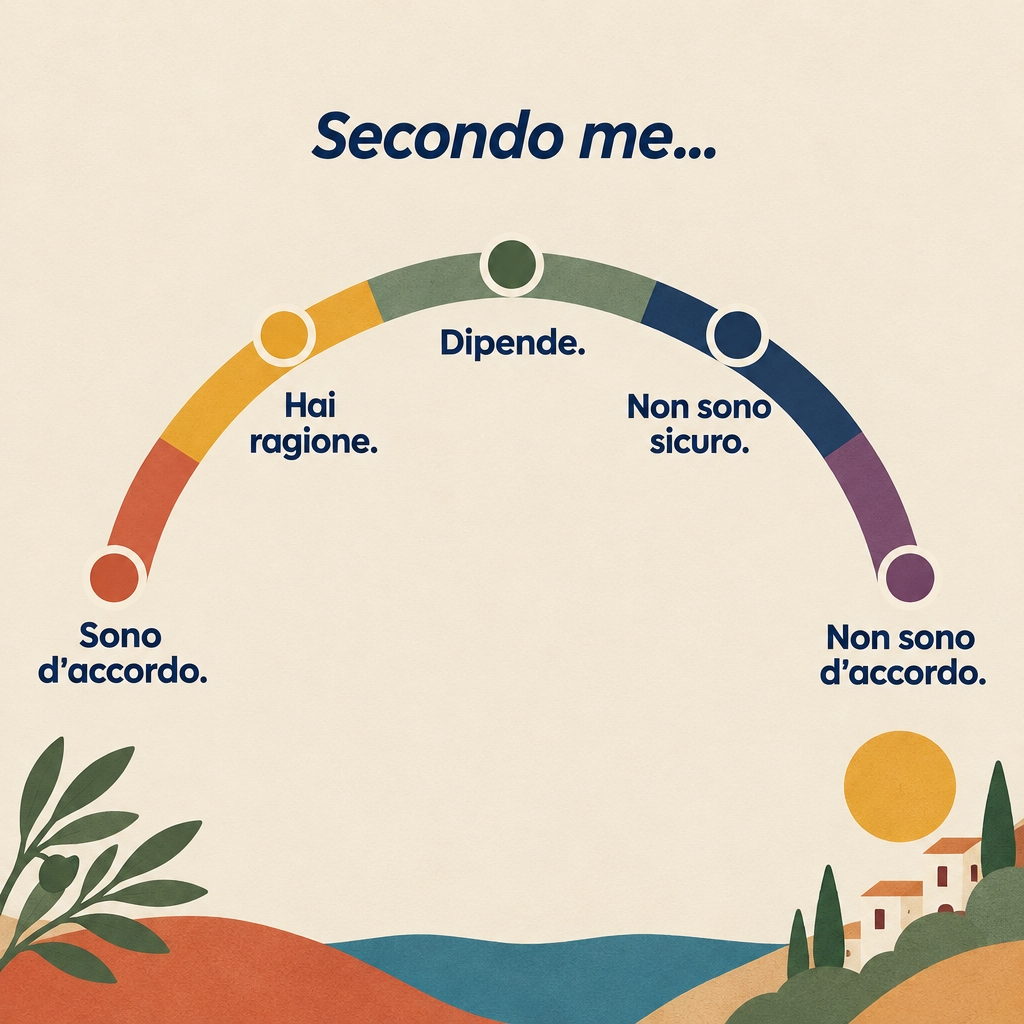
Secondo + person: secondo me, secondo te, secondo Marco.
Say what you think, agree and disagree politely, give reasons and results — and join short sentences into natural, connected speech about travel, holidays and the weather.
Say these aloud before you start. They come from earlier lessons.
To give an opinion, put secondo in front of the person: secondo me (in my opinion), secondo te (in your opinion), secondo Marco. Secondo me, il mare è bellissimo — in my opinion, the sea is beautiful.
To agree, use essere d'accordo: sono d'accordo (I agree), sono d'accordo con te (I agree with you). To disagree politely, just add non — non sono d'accordo — and soften it with a reason: Non sono d'accordo, però capisco (I don't agree, but I understand).
D'accordo never changes: it is sono d'accordo for everyone, men and women.
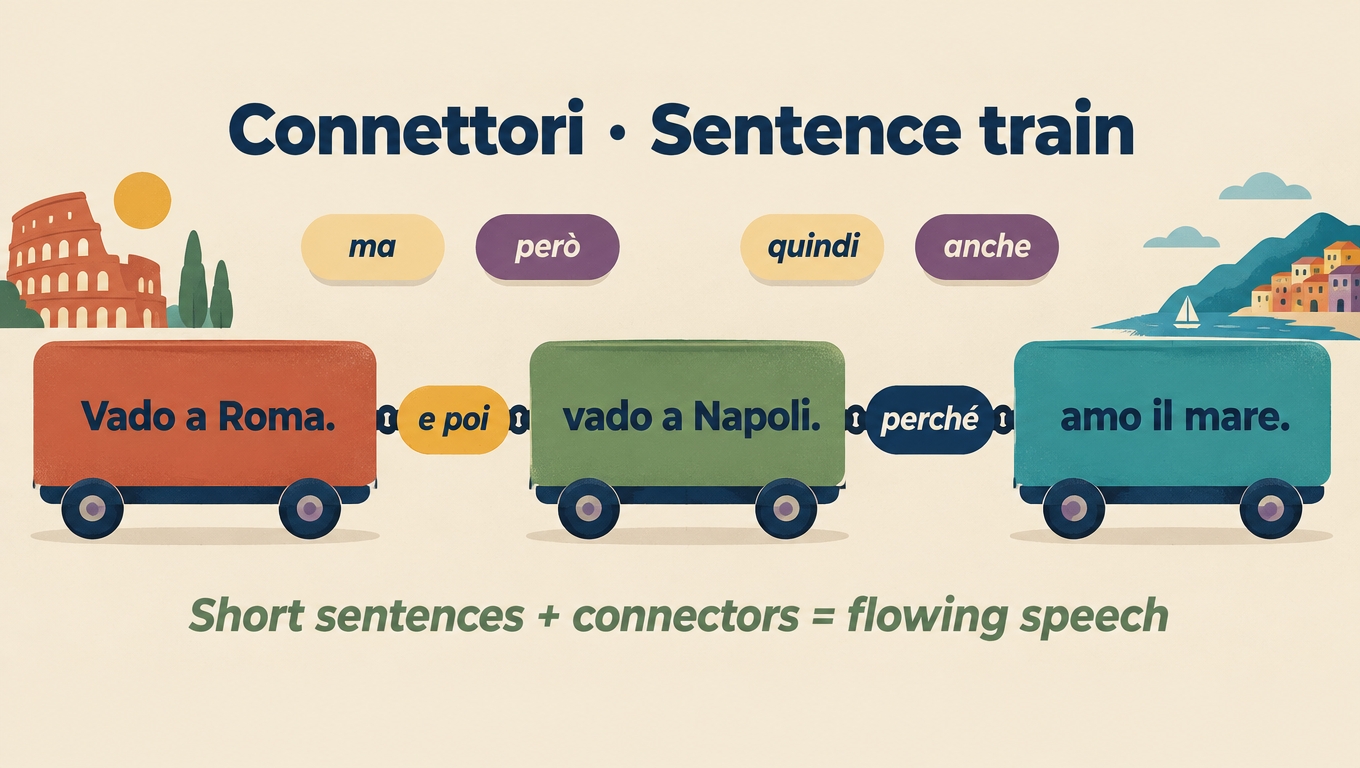
Seven small words let you join short statements into natural, connected speech. Perché gives the reason, quindi gives the result, and però contrasts two ideas — it can also sit at the end of a sentence: Mi piace, però… (I like it, though…).
Allora moves the conversation forward (so, well then). Anche adds an idea (also, too). Invece switches to the alternative (instead, on the other hand). Forse makes something uncertain (perhaps, maybe) and usually comes first in the sentence.
Listen for the pattern: statement + connector + statement. Fa caldo, quindi andiamo al mare. That one line contains a fact, a result and an action — this is what connected speech sounds like.
Italian uses avere (to have) where English uses to be. Avere ragione means to be right: hai ragione (you're right), ho ragione io (I'm right). It is the friendliest way to end a friendly debate.
Avere paura di means to be afraid of. Put di + infinitive after it for an action: ho paura di volare (I'm afraid of flying). Put di + article + noun for a thing: ho paura del temporale (I'm afraid of thunderstorms).
Because these are avere expressions, every person works the same way: ho, hai, ha, abbiamo, avete, hanno + ragione / paura.
Sometimes nobody in particular is acting — the statement is just a general rule or truth. Italian handles this with impersonal expressions. È importante / è bello / è difficile + infinitive: è importante parlare ogni giorno (it's important to speak every day).
Bisogna + infinitive means it is necessary to — in practice, you/we have to: bisogna comprare il biglietto (you have to buy the ticket). Bisogna never changes person: one form for everyone.
These expressions are perfect for travel talk: bisogna prendere il treno delle otto (we have to take the eight o'clock train), è bello viaggiare in treno (it's nice to travel by train).
| Form | connettore | esempio |
|---|---|---|
| because / why | perché | Studio perché voglio andare in Italia. |
| so, therefore | quindi | Fa caldo, quindi andiamo al mare. |
| but, however | però | Mi piace il mare, però preferisco la montagna. |
| so, well then | allora | Allora, prendiamo il treno? |
| also, too | anche | Anche a me piace viaggiare. |
| instead, on the other hand | invece | Io resto qui, invece tu parti. |
| perhaps, maybe | forse | Forse andiamo in Spagna. |
Perché answers perché?; quindi introduces the result; però can also end a sentence.
| Form | avere ragione (to be right) | avere paura (to be afraid) |
|---|---|---|
| io | ho ragione | ho paura |
| tu | hai ragione | hai paura |
| lui / lei | ha ragione | ha paura |
| noi | abbiamo ragione | abbiamo paura |
| voi | avete ragione | avete paura |
| loro | hanno ragione | hanno paura |
Ragione and paura never change; only the avere part conjugates. Avere paura di + infinitive: ho paura di volare.
| Form | espressione | esempio |
|---|---|---|
| it is important to | è importante | È importante parlare ogni giorno. |
| it is necessary to / you have to | bisogna | Bisogna comprare il biglietto. |
| it is nice to | è bello | È bello viaggiare in treno. |
| it is difficult to | è difficile | È difficile dormire in aereo. |
No person, no agreement — just the expression plus an infinitive. Bisogna has only this one form.
| Italian | English | Pronunciation | Audio |
|---|---|---|---|
| viaggiare | to travel | /vjadˈdʒare/ vyahd-JAH-reh | Listen in Italian: Slow in Italian: viaggiare |
| visitare | to visit | /viziˈtare/ vee-zee-TAH-reh | Listen in Italian: Slow in Italian: visitare |
| nuotare | to swim | /nwɔˈtare/ nwoh-TAH-reh | Listen in Italian: Slow in Italian: nuotare |
| prendere | to take, to have (food and drink) | /ˈprɛndere/ PREHN-deh-reh | Listen in Italian: Slow in Italian: prendere |
| partire | to leave, to depart | /parˈtire/ par-TEE-reh | Listen in Italian: Slow in Italian: partire |
| preferire | to prefer | /prefeˈrire/ preh-feh-REE-reh | Listen in Italian: Slow in Italian: preferire |
| camminare | to walk | /kammiˈnare/ kahm-mee-NAH-reh | Listen in Italian: Slow in Italian: camminare |
| il viaggio | the journey, the trip | /il ˈvjaddʒo/ eel VYAHD-joh | Listen in Italian: Slow in Italian: il viaggio |
| la vacanza | the holiday | /la vaˈkantsa/ lah vah-KAHN-tsah | Listen in Italian: Slow in Italian: la vacanza |
| il mare | the sea, the seaside | /il ˈmare/ eel MAH-reh | Listen in Italian: Slow in Italian: il mare |
| la montagna | the mountain, the mountains | /la monˈtaɲɲa/ lah mohn-TAH-nyah | Listen in Italian: Slow in Italian: la montagna |
| la spiaggia | the beach | /la ˈspjaddʒa/ lah SPYAHD-jah | Listen in Italian: Slow in Italian: la spiaggia |
| la città | the city, the town | /la tʃitˈta/ lah cheet-TAH | Listen in Italian: Slow in Italian: la città |
| il paese | the country; the village | /il paˈeze/ eel pah-EH-zeh | Listen in Italian: Slow in Italian: il paese |
| il treno | the train | /il ˈtrɛno/ eel TREH-noh | Listen in Italian: Slow in Italian: il treno |
| l'aereo | the plane | /l aˈɛreo/ leh-REH-oh | Listen in Italian: Slow in Italian: l'aereo |
| l'autobus | the bus | /l ˈautobus/ LOW-toh-boos | Listen in Italian: Slow in Italian: l'autobus |
| la macchina | car | /ˈmakkina/ MAHK-kee-nah | Listen in Italian: Slow in Italian: la macchina |
| il biglietto | the ticket | /il biʎˈʎetto/ eel bee-LYEHT-toh | Listen in Italian: Slow in Italian: il biglietto |
| l'albergo | the hotel | /l alˈbɛrɡo/ lahl-BEHR-goh | Listen in Italian: Slow in Italian: l'albergo |
| il tempo | weather; time | /ˈtempo/ TEHM-poh | Listen in Italian: Slow in Italian: il tempo |
| il sole | sun | /ˈsole/ SOH-leh | Listen in Italian: Slow in Italian: il sole |
| la pioggia | rain | /ˈpjɔddʒa/ PYOHD-jah | Listen in Italian: Slow in Italian: la pioggia |
| quindi | so, therefore | /ˈkwindi/ KWEEN-dee | Listen in Italian: Slow in Italian: quindi |
| però | but, however | /peˈrɔ/ peh-ROH | Listen in Italian: Slow in Italian: però |
| allora | so, well then; then | /alˈlora/ ahl-LOH-rah | Listen in Italian: Slow in Italian: allora |
| anche | also, too | /ˈanke/ AHN-keh | Listen in Italian: Slow in Italian: anche |
| invece | instead, on the other hand | /inˈvetʃe/ een-VEH-cheh | Listen in Italian: Slow in Italian: invece |
| forse | perhaps, maybe | /ˈforse/ FOHR-seh | Listen in Italian: Slow in Italian: forse |
| secondo | according to (secondo me — in my opinion) | /seˈkondo/ seh-KOHN-doh | Listen in Italian: Slow in Italian: secondo |
Secondo me, l'Italia è bellissima.
In my opinion, Italy is beautiful.
IPA /seˈkondo ˈme litaˈlja ˈɛ bellisˈsima/
Say it seh-KOHN-doh meh, lee-TAH-lyah EH behl-LEES-see-mah
Secondo + person: secondo me, secondo te, secondo Marco.
Secondo te, com'è Roma?
What do you think Rome is like?
IPA /seˈkondo ˈte koˈmɛ ˈroma/
Say it seh-KOHN-doh teh, koh-MEH ROH-mah
Com'è = come + è. Use tu with friends, Lei with strangers.
Sono d'accordo con te.
I agree with you.
IPA /ˈsono dakˈkordo kon ˈte/
Say it SOH-noh dahk-KOHR-doh kohn teh
Essere d'accordo — d'accordo never changes.
Non sono d'accordo, però capisco.
I don't agree, but I understand.
IPA /non ˈsono dakˈkordo peˈrɔ kaˈpisko/
Say it nohn SOH-noh dahk-KOHR-doh, peh-ROH kah-PEES-koh
A polite way to disagree: add però and a softener.
Hai ragione!
You're right!
IPA /ai raˈdʒone/
Say it eye rah-JOH-neh
Avere ragione — literally 'to have rightness'. Formal: Ha ragione!
Ho paura di volare.
I'm afraid of flying.
IPA /o paˈura di voˈlare/
Say it oh pah-OO-rah dee voh-LAH-reh
Avere paura di + infinitive: ho paura di nuotare, di guidare.
Mi piace il mare perché è tranquillo.
I like the sea because it's calm.
IPA /mi ˈpjatʃe il ˈmare perˈke ˈɛ trankˈwillo/
Say it mee PYAH-cheh eel MAH-reh pehr-KEH EH trahn-KWEEL-loh
Preferisco la montagna al mare.
I prefer the mountains to the seaside.
IPA /prefeˈrisko la monˈtaɲɲa al ˈmare/
Say it preh-feh-REES-koh lah mohn-TAH-nyah ahl MAH-reh
Preferire X a Y — a + article joins the second thing.
Studio l'italiano perché voglio andare in Italia.
I'm studying Italian because I want to go to Italy.
IPA /ˈstudio litaˈljano perˈke ˈvɔʎʎo anˈdare in itaˈlja/
Say it STOO-dyoh lee-tah-LYAH-noh pehr-KEH VOHL-yoh ahn-DAH-reh een ee-TAH-lyah
Perché + reason: the classic answer to a perché question.
Fa caldo, quindi andiamo al mare.
It's hot, so let's go to the seaside.
IPA /fa ˈkaldo ˈkwindi anˈdjamo al ˈmare/
Say it fah KAHL-doh, KWEEN-dee ahn-DYAH-moh ahl MAH-reh
Quindi introduces the result: fact + quindi + action.
Forse andiamo in Spagna quest'anno.
Perhaps we'll go to Spain this year.
IPA /ˈforse anˈdjamo in ˈspaɲɲa kwest ˈanno/
Say it FOHR-seh ahn-DYAH-moh een SPAH-nyah kwehs-TAHN-noh
Forse usually comes first in the sentence.
Allora, andiamo in treno o in aereo?
So, shall we go by train or by plane?
IPA /alˈlora anˈdjamo in ˈtrɛno o in aˈɛreo/
Say it ahl-LOH-rah, ahn-DYAH-moh een TREH-noh oh een ah-EH-reh-oh
In + means of transport: in treno, in aereo, in macchina, in autobus.
Io vado al mare, invece Marco va in montagna.
I'm going to the seaside; Marco, on the other hand, is going to the mountains.
IPA /ˈio ˈvado al ˈmare inˈvetʃe ˈmarko ˈva in monˈtaɲɲa/
Say it EE-oh VAH-doh ahl MAH-reh, een-VEH-cheh MAR-koh vah een mohn-TAH-nyah
Invece contrasts two parallel statements.
Anche a me piace viaggiare.
I like travelling too.
IPA /ˈanke a ˈme ˈpjatʃe vjadˈdʒare/
Say it AHN-keh ah meh PYAH-cheh vyahd-JAH-reh
Anche a me — me too, with piacere.
È importante parlare ogni giorno.
It's important to speak every day.
IPA /ɛ imporˈtante parˈlare ˈɔɲi ˈdʒorno/
Say it eh eem-pohr-TAHN-teh par-LAH-reh OH-nyee JOHR-noh
Impersonal: no person, just è + adjective + infinitive.
Bisogna prendere il treno delle otto.
We have to take the eight o'clock train.
IPA /biˈzɔɲɲa ˈprɛndere il ˈtrɛno ˈdelle ˈɔtto/
Say it bee-ZOH-nyah PREHN-deh-reh eel TREH-noh DEHL-leh OHT-toh
Bisogna + infinitive: one form for everyone.
Bisogna comprare il biglietto prima di partire.
You have to buy the ticket before leaving.
IPA /biˈzɔɲɲa komˈprare il biʎˈʎetto ˈprima di parˈtire/
Say it bee-ZOH-nyah kohm-PRAH-reh eel bee-LYEHT-toh PREE-mah dee par-TEE-reh
Prima di + infinitive: before doing something.
Che tempo fa oggi?
What's the weather like today?
IPA /ke ˈtɛmpo ˈfa ˈɔddʒi/
Say it keh TEHM-poh fah OHD-jee
The standard weather question — literally 'what weather does it make?'
C'è il sole e fa caldo.
It's sunny and hot.
IPA /tʃ ˈɛ il ˈsole e ˈfa ˈkaldo/
Say it cheh eel SOH-leh eh fah KAHL-doh
Weather idioms: c'è il sole (it's sunny), fa caldo (it's hot), fa freddo (it's cold).
Piove, quindi restiamo in albergo.
It's raining, so we're staying at the hotel.
IPA /ˈpjove ˈkwindi resˈtjamo in alˈbɛrɡo/
Say it PYOH-veh, KWEEN-dee reh-STYAH-moh een ahl-BEHR-goh
Quando partiamo per le vacanze?
When do we leave for the holidays?
IPA /ˈkwando parˈtjamo per le vaˈkantse/
Say it KWAHN-doh par-TYAH-moh pehr leh vah-KAHN-tseh
Partire per + destination or occasion.
Prendo l'aereo per Roma.
I'm taking the plane to Rome.
IPA /ˈprendo l aˈɛreo per ˈroma/
Say it PREHN-doh leh-REH-oh pehr ROH-mah
Prendere is the verb for catching transport.
L'anno scorso siamo andati al mare.
Last year we went to the seaside.
IPA /l ˈanno ˈskorso ˈsjamo anˈdati al ˈmare/
Say it LAHN-noh SKOHR-soh SYAH-moh ahn-DAH-tee ahl MAH-reh
Andare takes essere in the passato prossimo: siamo andati.
Dove preferisci andare in vacanza?
Where do you prefer to go on holiday?
IPA /ˈdove prefeˈriʃʃi anˈdare in vaˈkantsa/
Say it DOH-veh preh-feh-REESH-shee ahn-DAH-reh een vah-KAHN-tsah
Andare in vacanza — to go on holiday.
Giulia and Ben are planning their summer holiday in a café in Bologna.
Allora, Ben, dove andiamo in vacanza quest'estate?
So, Ben, where are we going on holiday this summer?
Listen in Italian: Slow in Italian: Allora, Ben, dove andiamo in vacanza quest'estate?Secondo me, il mare è perfetto perché fa caldo e mi piace nuotare.
In my opinion, the seaside is perfect because it's hot and I like swimming.
Listen in Italian: Slow in Italian: Secondo me, il mare è perfetto perché fa caldo e mi piace nuotare.Non sono d'accordo. Preferisco la montagna perché è tranquilla.
I don't agree. I prefer the mountains because they're peaceful.
Listen in Italian: Slow in Italian: Non sono d'accordo. Preferisco la montagna perché è tranquilla.Però in montagna fa freddo la sera!
But it's cold in the mountains in the evening!
Listen in Italian: Slow in Italian: Però in montagna fa freddo la sera!È vero. Però in montagna possiamo camminare e mangiare bene.
That's true. But in the mountains we can walk and eat well.
Listen in Italian: Slow in Italian: È vero. Però in montagna possiamo camminare e mangiare bene.Forse hai ragione tu. Allora, andiamo in montagna!
Maybe you're right. Well then, let's go to the mountains!
Listen in Italian: Slow in Italian: Forse hai ragione tu. Allora, andiamo in montagna!Perfetto! Bisogna comprare i biglietti del treno.
Perfect! We need to buy the train tickets.
Listen in Italian: Slow in Italian: Perfetto! Bisogna comprare i biglietti del treno.Sono d'accordo. Prendiamo il treno delle nove.
I agree. Let's take the nine o'clock train.
Listen in Italian: Slow in Italian: Sono d'accordo. Prendiamo il treno delle nove.Marta and David are waiting for their train to Rome.
Che tempo fa a Roma oggi?
What's the weather like in Rome today?
Listen in Italian: Slow in Italian: Che tempo fa a Roma oggi?Secondo l'app, c'è il sole e fa caldo.
According to the app, it's sunny and hot.
Listen in Italian: Slow in Italian: Secondo l'app, c'è il sole e fa caldo.Bene! Amo Roma perché è una città bellissima.
Great! I love Rome because it's a beautiful city.
Listen in Italian: Slow in Italian: Bene! Amo Roma perché è una città bellissima.Anche a me piace, però preferisco viaggiare in treno: ho paura di volare.
I like it too, but I prefer travelling by train: I'm afraid of flying.
Listen in Italian: Slow in Italian: Anche a me piace, però preferisco viaggiare in treno: ho paura di volare.Capisco. È importante viaggiare tranquilli.
I understand. It's important to travel in a relaxed way.
Listen in Italian: Slow in Italian: Capisco. È importante viaggiare tranquilli.Quando parte il nostro treno?
When does our train leave?
Listen in Italian: Slow in Italian: Quando parte il nostro treno?Alle dieci e mezza, quindi abbiamo tempo per un caffè.
At half past ten, so we have time for a coffee.
Listen in Italian: Slow in Italian: Alle dieci e mezza, quindi abbiamo tempo per un caffè.Hai ragione! Andiamo al bar.
You're right! Let's go to the bar.
Listen in Italian: Slow in Italian: Hai ragione! Andiamo al bar.Choose the correct connector.
Choose the correct connector.
Choose the correct word to give an opinion.
Choose the correct word.
Choose the correct impersonal expression.
Fill the gap with the correct noun.
Fill the gap with the correct connector.
Fill the gap with the infinitive.
Fill the gap with the correct connector.
Write the correct form.
Translate into Italian.
Translate into Italian (informal you).
Translate into Italian using the impersonal expression.
Translate into English.
Tap the words in the correct order.
Tap a connector, then tap its meaning.
Play the audio, then type exactly what you hear.
Play the audio, then choose the matching sentence.
Write one connected sentence.
Choose the correct article.
True or false?
Say the sentence aloud, then show the meaning and rate yourself.
Say each sentence aloud three times: once slowly, once at normal speed, once from memory. Then change the opinion or the place and say your own version.
Before you move on, make sure you can do all of this without looking:
Go deeper: Present tense · -ere verbs · -ire verbs · -isc verbs · avere · Prepositions