
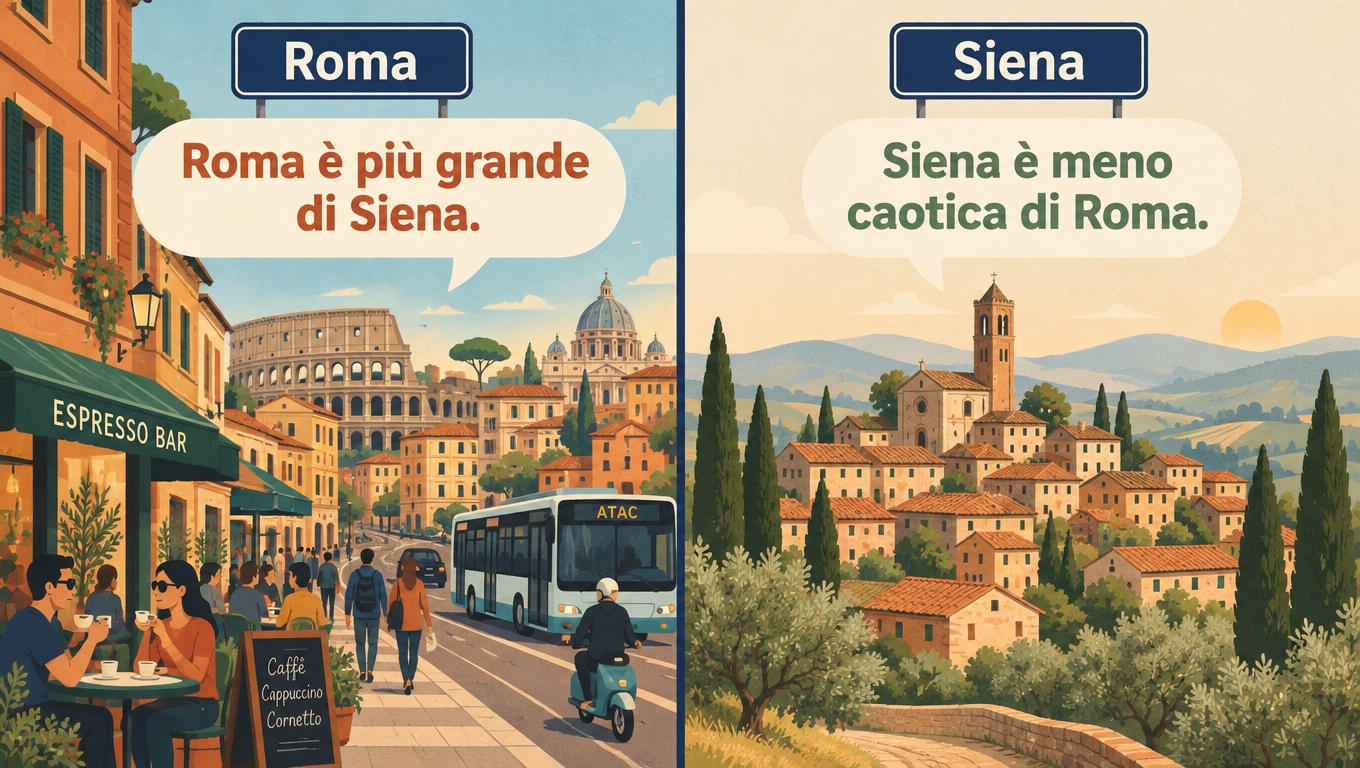
Roma è più grande di Venezia.
Rome is bigger than Venice.
IPA /ˈroma ɛ ˈpju ˈɡrande di veˈnɛttsja/
Say it ROH-mah eh PYOO GRAHN-deh dee veh-NEHT-syah
Listen in Italian:
Slow in Italian:
Roma è più grande di Venezia.
Describe people, places and things, then compare them: più... di, meno... di, meglio and peggio, with the vocabulary of appearance and quality.
Say these aloud before you start. They come from earlier lessons.
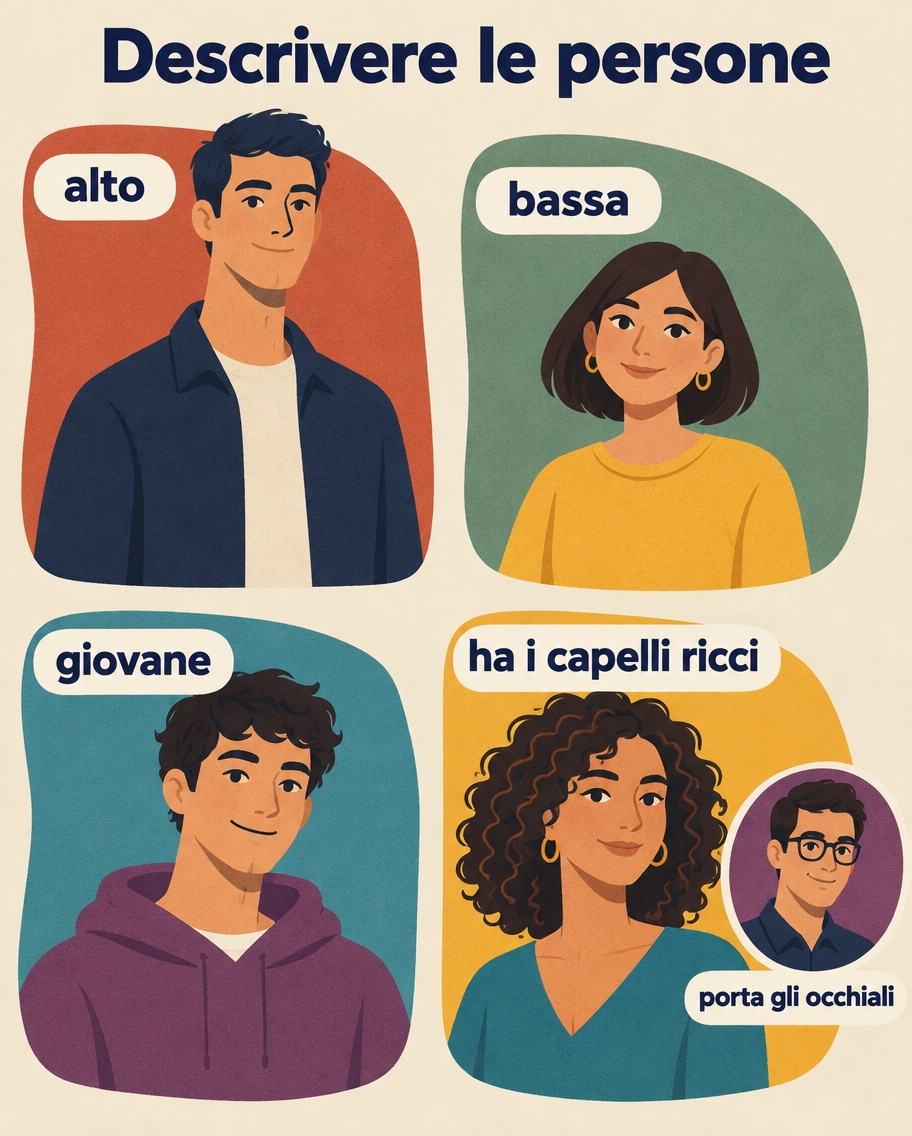
Every adjective agrees with its noun in gender and number: -o (masculine singular), -a (feminine singular), -i (masculine plural), -e (feminine plural). Un uomo alto, una donna alta, due uomini alti, due donne alte.
Position: most adjectives follow the noun in Italian — una casa grande, un film interessante. A few common ones usually precede it: bello, brutto, nuovo, vecchio, grande, piccolo. Una bella casa, un nuovo amico.
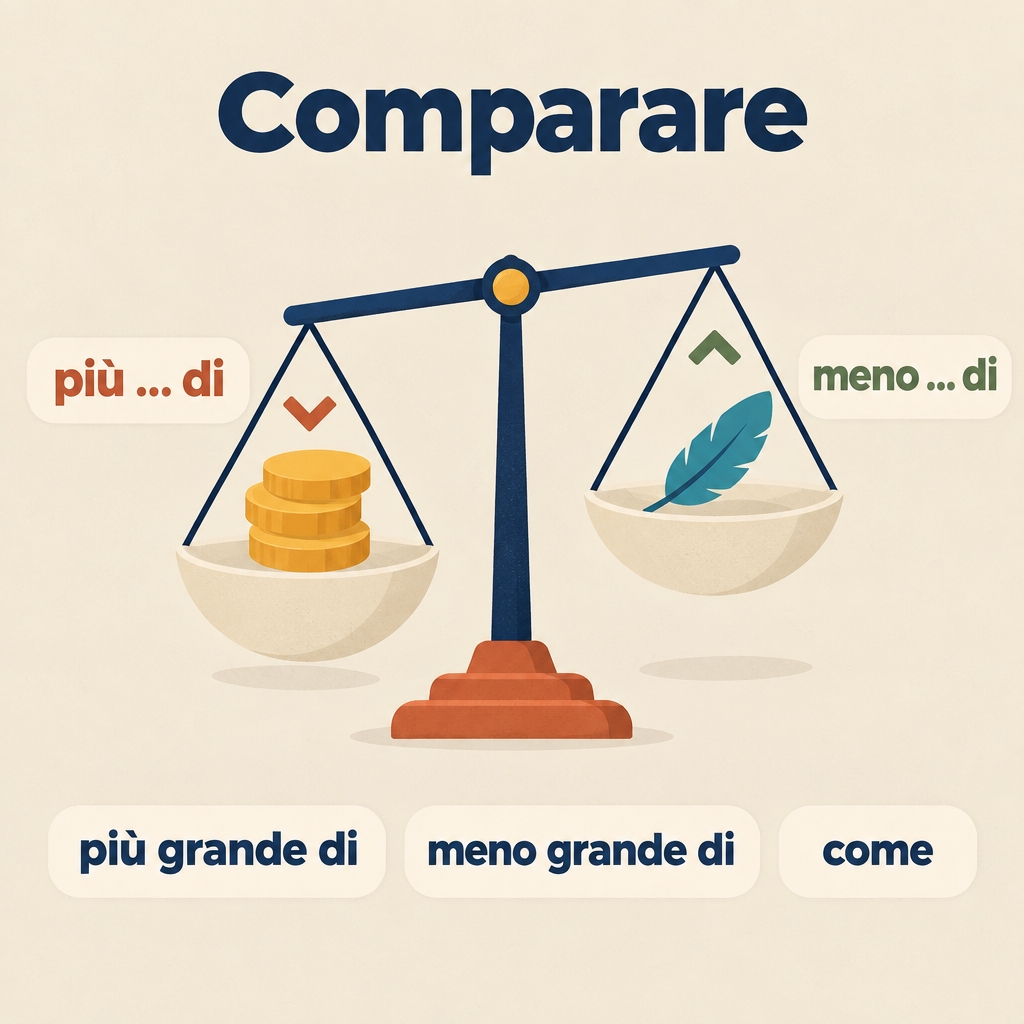
To compare two things: più + adjective + di + the other thing. Roma è più grande di Venezia. For the opposite, meno + adjective + di: Questo libro è meno caro di quello.
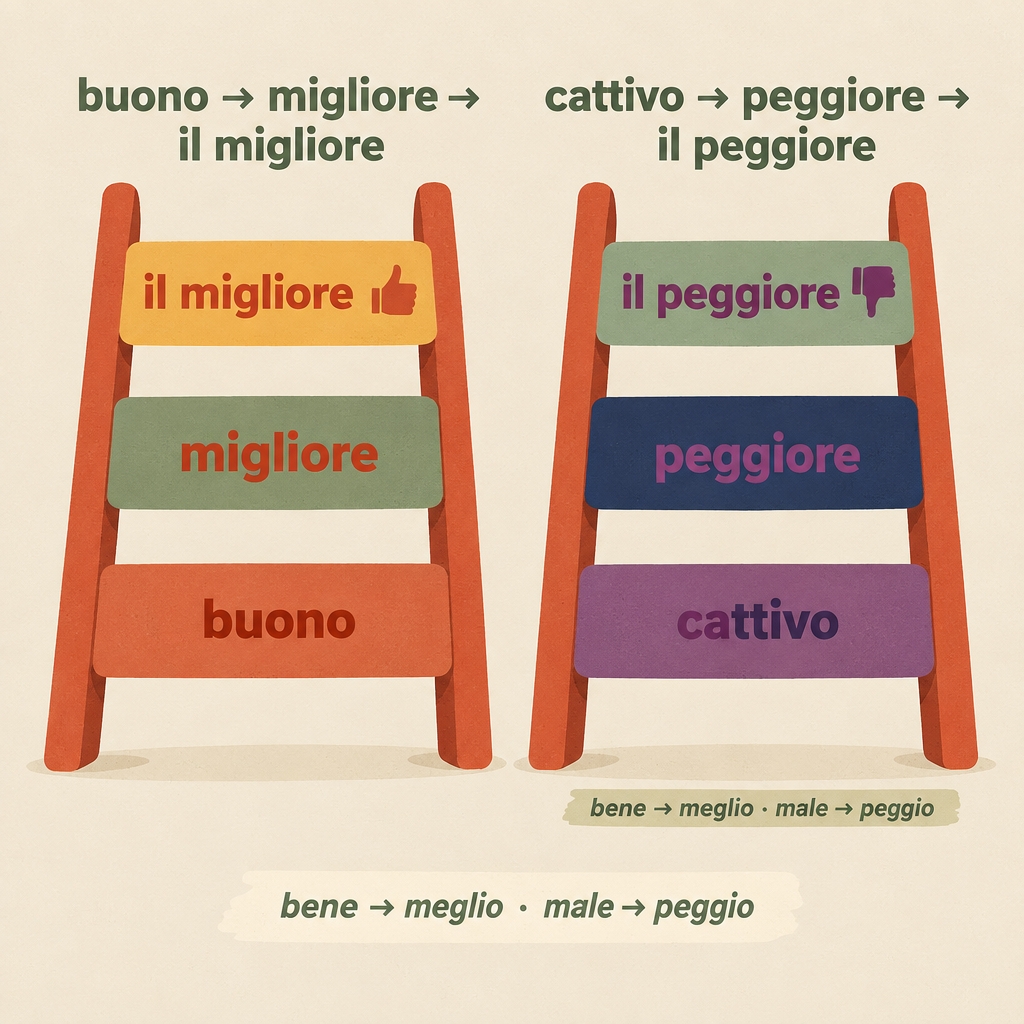
For 'better' and 'worse', Italian distinguishes adverbs from adjectives. meglio (better) and peggio (worse) are adverbs or neutral judgements: In questo ristorante si mangia meglio. As adjectives that agree with the noun, use migliore/migliori and peggiore/peggiori: Questo ristorante è migliore. Oggi il tempo è peggiore.
Three quantity words: molto (a lot/very), poco (little), troppo (too much). As adverbs with adjectives and verbs they do not change: molto bello, mangio poco, troppo caro. As adjectives with nouns they agree: molta gente, poche case.
Watch the trap: molto caro means 'very expensive', not 'a lot of expensive'.
Useful description pairs: alto/basso (tall/short), grande/piccolo (big/small), caro/economico (expensive/cheap), nuovo/vecchio (new/old), bello/brutto (beautiful/ugly), a destra/a sinistra (right/left).
For people: Ha gli occhi azzurri (he has blue eyes), È simpatico (he is nice), È gentile (she is kind). Learn appearance and personality together so descriptions feel natural.
| Form | masculine | feminine |
|---|---|---|
| singular | grande (invariant) | grande |
| singular | alto | alta |
| plural | alti | alte |
alto/alta/alti/alte; grande and interessante keep -e in the singular and take -i in the plural.
| Form | pattern | example |
|---|---|---|
| more ... than | più + adj + di | Roma è più grande di Venezia. |
| less ... than | meno + adj + di | Questo è meno caro di quello. |
| better / worse | meglio / peggio | Questo è meglio, quello è peggio. |
meglio and peggio are adverbs (Si mangia meglio); migliore and peggiore are adjectives that agree (È migliore, sono migliori). meglio and peggio are adverbs (Si mangia meglio); migliore and peggiore are adjectives that agree (È migliore, sono migliori). meglio and peggio are adverbs (Si mangia meglio); migliore and peggiore are adjectives that agree (È migliore, sono migliori). di becomes che when comparing two verbs or clauses: È meglio partire che restare.
| Italian | English | Pronunciation | Audio |
|---|---|---|---|
| alto | tall, high | /ˈalto/ AHL-toh | Listen in Italian: Slow in Italian: alto |
| basso | short, low | /ˈbasso/ BAHS-soh | Listen in Italian: Slow in Italian: basso |
| grande | big, great | /ˈɡrande/ GRAHN-deh | Listen in Italian: Slow in Italian: grande |
| piccolo | small, little | /ˈpikkolo/ PEEK-koh-loh | Listen in Italian: Slow in Italian: piccolo |
| bello | beautiful, handsome | /ˈbɛllo/ BEHL-loh | Listen in Italian: Slow in Italian: bello |
| brutto | ugly, bad (of weather) | /ˈbrutto/ BROOT-toh | Listen in Italian: Slow in Italian: brutto |
| nuovo | new | /ˈnwɔvo/ NWOH-voh | Listen in Italian: Slow in Italian: nuovo |
| vecchio | old | /ˈvɛkkjo/ VEHK-kyoh | Listen in Italian: Slow in Italian: vecchio |
| caro | expensive; dear | /ˈkaro/ KAH-roh | Listen in Italian: Slow in Italian: caro |
| economico | cheap, economical | /ekoˈnɔmiko/ eh-koh-NOH-mee-koh | Listen in Italian: Slow in Italian: economico |
| simpatico | nice, likeable | /simˈpatiko/ seem-PAH-tee-koh | Listen in Italian: Slow in Italian: simpatico |
| gentile | kind, polite | /dʒenˈtile/ jehn-TEE-leh | Listen in Italian: Slow in Italian: gentile |
| intelligente | intelligent | /intelliˈdʒɛnte/ een-tehl-lee-JEHN-teh | Listen in Italian: Slow in Italian: intelligente |
| forte | strong; loud | /ˈfɔrte/ FOR-teh | Listen in Italian: Slow in Italian: forte |
| meglio | better | /ˈmɛʎʎo/ MEH-lyoh | Listen in Italian: Slow in Italian: meglio |
| peggio | worse | /ˈpɛddʒo/ PEHJ-joh | Listen in Italian: Slow in Italian: peggio |
| più | more, most | /ˈpju/ PYOO | Listen in Italian: Slow in Italian: più |
| meno | less, fewer | /ˈmeno/ MEH-noh | Listen in Italian: Slow in Italian: meno |
| poco | little, few | /ˈpɔko/ POH-koh | Listen in Italian: Slow in Italian: poco |
| troppo | too much, too many | /ˈtrɔppo/ TROHP-poh | Listen in Italian: Slow in Italian: troppo |
| questo | this | /ˈkwesto/ KWEH-stoh | Listen in Italian: Slow in Italian: questo |
| quello | that | /ˈkwɛllo/ KWEHL-loh | Listen in Italian: Slow in Italian: quello |
| la destra | right (side) | /ˈdestra/ DEHS-trah | Listen in Italian: Slow in Italian: la destra |
| la sinistra | left (side) | /siˈnistra/ see-NEES-trah | Listen in Italian: Slow in Italian: la sinistra |
| gli occhi | eyes | /ˈɔkki/ OHK-kee | Listen in Italian: Slow in Italian: gli occhi |
| il negozio | shop, store | /neˈɡɔttsjo/ neh-GOHT-syoh | Listen in Italian: Slow in Italian: il negozio |
| veloce | fast | /veˈlɔtʃe/ veh-LOH-cheh | Listen in Italian: Slow in Italian: veloce |
| tranquillo | calm | /traŋˈkwillo/ tran-KWEE-lloh | Listen in Italian: Slow in Italian: tranquillo |
| sereno | serene | /seˈreno/ seh-REH-noh | Listen in Italian: Slow in Italian: sereno |
| divertente | funny | /diverˈtɛnte/ dee-ver-TEHN-teh | Listen in Italian: Slow in Italian: divertente |
| stupendo | wonderful | /stuˈpɛndo/ stoo-PEN-doh | Listen in Italian: Slow in Italian: stupendo |
| perfetto | perfect | /perˈfɛtto/ per-FEHT-toh | Listen in Italian: Slow in Italian: perfetto |
Roma è più grande di Venezia.
Rome is bigger than Venice.
IPA /ˈroma ɛ ˈpju ˈɡrande di veˈnɛttsja/
Say it ROH-mah eh PYOO GRAHN-deh dee veh-NEHT-syah
Questo libro è meno caro di quello.
This book is cheaper than that one.
IPA /ˈkwesto ˈlibro ɛ ˈmeno ˈkaro di ˈkwɛllo/
Say it KWEH-stoh LEE-broh eh MEH-noh KAH-roh dee KWEHL-loh
Questo ristorante è migliore.
This restaurant is better.
IPA /ˈkwesto ristoˈrante ɛ miʎˈʎore/
Say it KWEH-stoh rees-toh-RAHN-teh eh mee-LYOH-reh
migliore = better (adjective, agrees with ristorante). The adverb meglio appears in: In questo ristorante si mangia meglio.
Oggi il tempo è peggiore.
The weather today is worse.
IPA /ˈɔddʒi il ˈtempo ɛ peʎˈʎore/
Say it OH-jee eel TEHM-poh eh peh-LYOH-reh
peggiore = worse (adjective, agrees with tempo). The adverb is peggio: Il tempo è peggiorato.
Mio fratello è alto e simpatico.
My brother is tall and nice.
IPA /ˈmio fraˈtɛllo ɛ ˈalto e simˈpatiko/
Say it MEE-oh frah-TEHL-loh eh AHL-toh eh seem-PAH-tee-koh
Ha gli occhi azzurri.
He has blue eyes.
IPA /a ʎi ˈɔkki atˈtsurri/
Say it ah lyee OHK-kee aht-TSOOR-ree
azzurri agrees with occhi (masculine plural).
È una persona gentile.
She is a kind person.
IPA /ɛ ˈuna perˈsona dʒenˈtile/
Say it eh OO-nah pehr-SOH-nah jehn-TEE-leh
Il biglietto è troppo caro.
The ticket is too expensive.
IPA /il biʎˈʎɛtto ɛ ˈtrɔppo ˈkaro/
Say it eel bee-LYEHT-toh eh TROHP-poh KAH-roh
C'è molta gente qui.
There are a lot of people here.
IPA /ˈtʃɛ ˈmolta ˈdʒɛnte ˈkwi/
Say it cheh MOHL-tah JEHN-teh KWEE
gente is singular and feminine in Italian.
Dormo poco, ma bene.
I sleep little, but well.
IPA /ˈdormo ˈpɔko ma ˈbɛne/
Say it DOR-moh POH-koh mah BEH-neh
Questo è il mio nuovo amico.
This is my new friend.
IPA /ˈkwesto ɛ il ˈmio ˈnwɔvo aˈmiko/
Say it KWEH-stoh eh eel MEE-oh NWOH-voh ah-MEE-koh
nuovo precedes the noun.
La casa vecchia è a sinistra.
The old house is on the left.
IPA /la ˈkasa ˈvɛkkja ɛ a siˈnistra/
Say it lah KAH-zah VEHK-kyah eh ah see-NEES-trah
Il negozio è a destra.
The shop is on the right.
IPA /il neˈɡɔttsjo ɛ a ˈdestra/
Say it eel neh-GOHT-syoh eh ah DEHS-trah
Quel film è più interessante di questo.
That film is more interesting than this one.
IPA /kwel ˈfilm ɛ ˈpju interessanˈte di ˈkwesto/
Say it kwehl FEELM eh PYOO een-teh-rehs-SAHN-teh dee KWEH-stoh
Quale preferisci?
Which one do you prefer?
IPA /ˈkwale prefeˈriʃʃi/
Say it KWAH-leh preh-feh-REESH-shee
Preferisco questo.
I prefer this one.
IPA /prefeˈrisko ˈkwesto/
Say it preh-feh-REES-koh KWEH-stoh
È la più bella città d'Italia.
It is the most beautiful city in Italy.
IPA /ɛ la ˈpju ˈbɛlla tʃitˈta diˈtalja/
Say it eh lah PYOO BEHL-lah cheet-TAH dee-TAH-lyah
Superlative: il/la più + adjective.
Questo caffè è buonissimo!
This coffee is delicious!
IPA /ˈkwesto kafˈfɛ ɛ bwɔˈnissimo/
Say it KWEH-stoh kahf-FEH eh bwoh-NEES-see-moh
-issimo = very: buono → buonissimo.
Quella casa è più piccola di questa.
That house is smaller than this one.
IPA /ˈkwɛlla ˈkasa ɛ ˈpju ˈpikkola di ˈkwesta/
Say it KWEHL-lah KAH-zah eh PYOO PEEK-koh-lah dee KWEH-stah
Lei è molto intelligente.
She is very intelligent.
IPA /ˈlɛi ɛ ˈmolto intelliˈdʒɛnte/
Say it LAY eh MOHL-toh een-tehl-lee-JEHN-teh
molto + adjective = very.
Two friends compare restaurants before dinner.
Quale ristorante preferisci?
Which restaurant do you prefer?
Listen in Italian: Slow in Italian: Quale ristorante preferisci?Preferisco Da Mario. È migliore di quello in centro.
I prefer Da Mario. It is better than the one in the centre.
Listen in Italian: Slow in Italian: Preferisco Da Mario. È migliore di quello in centro.Ma è più lontano, no?
But it is farther away, is not it?
Listen in Italian: Slow in Italian: Ma è più lontano, no?Sì, ma la pizza è più buona e meno cara.
Yes, but the pizza is better and cheaper.
Listen in Italian: Slow in Italian: Sì, ma la pizza è più buona e meno cara.Va bene, andiamo a Da Mario!
All right, let's go to Da Mario!
Listen in Italian: Slow in Italian: Va bene, andiamo a Da Mario!Perfetto, è la mia scelta migliore!
Perfect, it is my best choice!
Listen in Italian: Slow in Italian: Perfetto, è la mia scelta migliore!Sara asks who a guest is.
Chi è quel ragazzo alto?
Who is that tall boy?
Listen in Italian: Slow in Italian: Chi è quel ragazzo alto?È il nuovo collega di Marco.
He is Marco's new colleague.
Listen in Italian: Slow in Italian: È il nuovo collega di Marco.È simpatico?
Is he nice?
Listen in Italian: Slow in Italian: È simpatico?Molto! E anche intelligente.
Very! And intelligent too.
Listen in Italian: Slow in Italian: Molto! E anche intelligente.Ha gli occhi azzurri, vero?
He has blue eyes, right?
Listen in Italian: Slow in Italian: Ha gli occhi azzurri, vero?Sì, e la voce è molto gentile.
Yes, and his manner is very kind.
Listen in Italian: Slow in Italian: Sì, e la voce è molto gentile.Choose the correct adjective form.
Choose the correct adjective form.
Choose the correct adjective form.
Fill the gap.
Fill the gap.
Fill the gap with the agreeing adjective.
Translate into Italian.
Translate into Italian.
Translate into Italian.
Translate into Italian.
Translate into English.
Translate into English.
Tap the words in the correct order.
Tap an adjective, then its opposite.
Tap a word, then its meaning.
True or false?
True or false?
Play the audio, then type exactly what you hear.
Play the audio, then pick the sentence.
Choose the correct article for the superlative.
Rewrite with the -issimo form.
Say the sentence aloud, then reveal and rate yourself.
Say the sentence aloud, then reveal and rate yourself.
Write the correct form.
Fill the gap with the direction word.
Describe two people you know aloud (height, eyes, personality), then compare two cities or restaurants you know using più, meno, meglio and peggio.
Before you move on, make sure you can do all of this without looking:
Go deeper: Adjective agreement · Comparisons · Questions